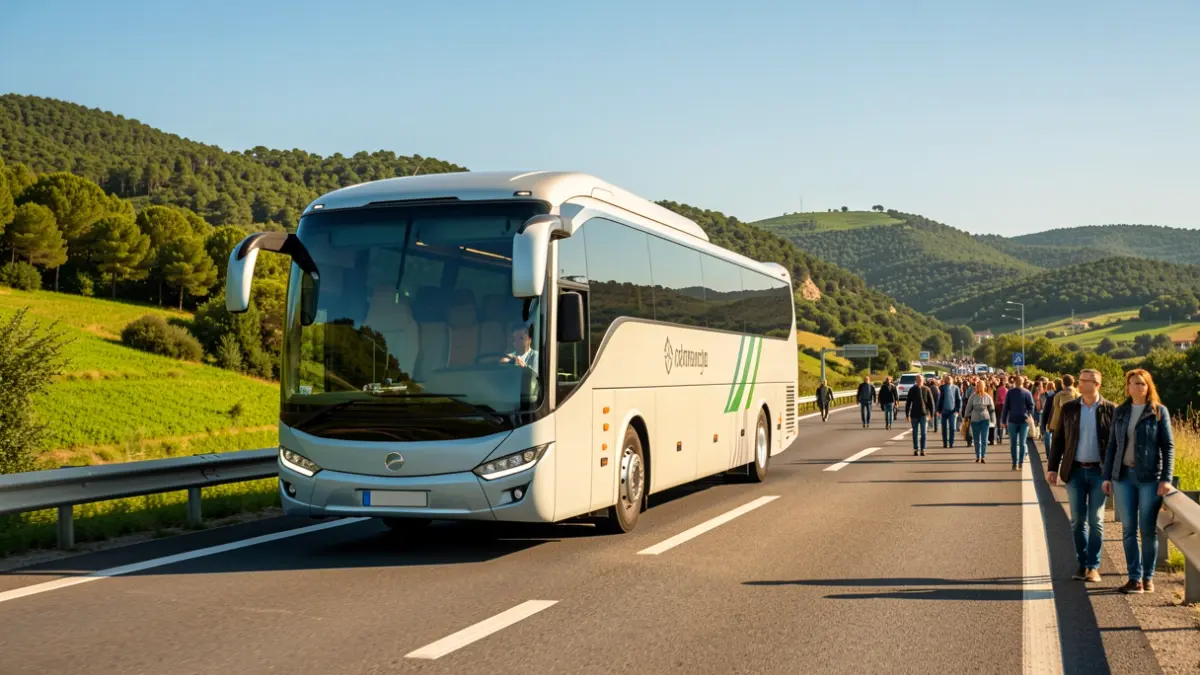
The Minister of Territory, Housing, and Ecological Transition, Sílvia Paneque, has confirmed that 97% of road transport companies have accepted the Government's offer to extend concession contracts in exchange for fleet renewals. This measure will postpone the public tendering of regular routes.
Initial forecasts were 75%, but now it is expected that by January 1, 2029, there will be 600 new decarbonized vehicles. Of these, 160 will be electric, around 320 hybrid, and the rest will use adapted diesel or other technologies.
Minister Paneque highlighted that the sector's involvement demonstrates a commitment to more efficient and higher-quality public transport. The total investment exceeds 200 million euros, borne entirely by the operators. In return for the investment, companies may have their expenses compensated with an extension of the concession for up to six years.
The intercity bus network in Catalunya has seen a surge in demand, reaching a historic high of 90 million journeys last year. The current system is based on old concessions, repeatedly extended, which were reaching a critical point with their imminent expiry.
Last April, the Generalitat decreed extensions of up to six years for concessions expiring in 2028, conditional on fleet decarbonization and service improvements. This decision sparked some debate, but a gradual public tendering of routes is emerging as the most likely medium-term solution.