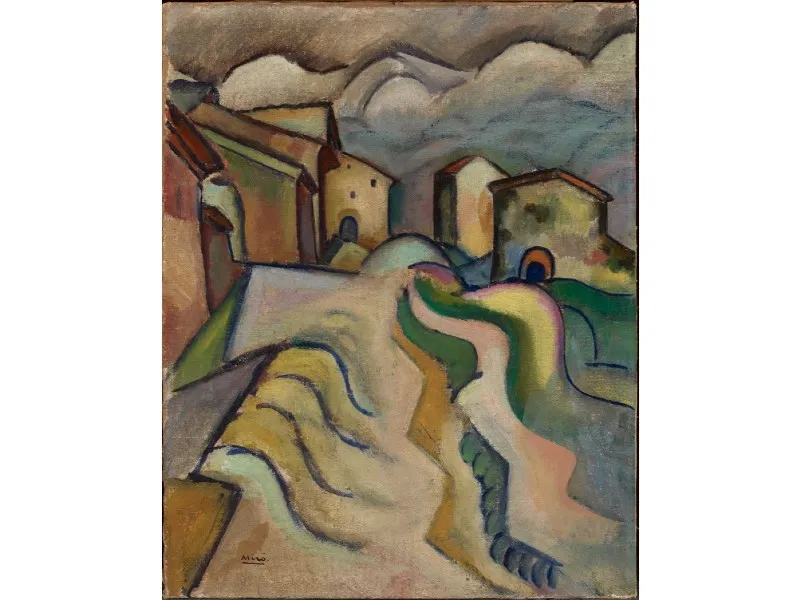
The painting, an oil on canvas measuring 49x39 centimeters, depicts the unique appearance of the village of Siurana and was created in 1917. This period is considered crucial in Miró's creative trajectory, belonging to his Fauvist or Catalan Cubist phase, where he found landscape and symbolic references that would become recurring in his later work.
This acquisition holds significant heritage value as it is a key work for understanding Miró's artistic evolution, from his early figurative expressions to the more innovative languages of later decades. The painting is part of a very limited set of works created during the artist's stay in Siurana, considered a fundamental episode in the definition of his plastic language.
The work has a close relationship with Siurana, el camí (1917), housed at the Reina Sofía Museum, sharing chronology, creative context, and stylistic influences. Furthermore, it was part of Miró's first solo exhibition at the Galeries Dalmau in Barcelona in 1918, a significant event in the artist's initial public projection.
The incorporation of Siurana, el poble into public collections will enhance the preservation, study, and dissemination of Catalan artistic heritage. It aligns with the acquisition policy of the National Collection by the Department of Culture, aimed at acquiring works of special artistic, historical, and heritage interest to ensure their conservation and public access.