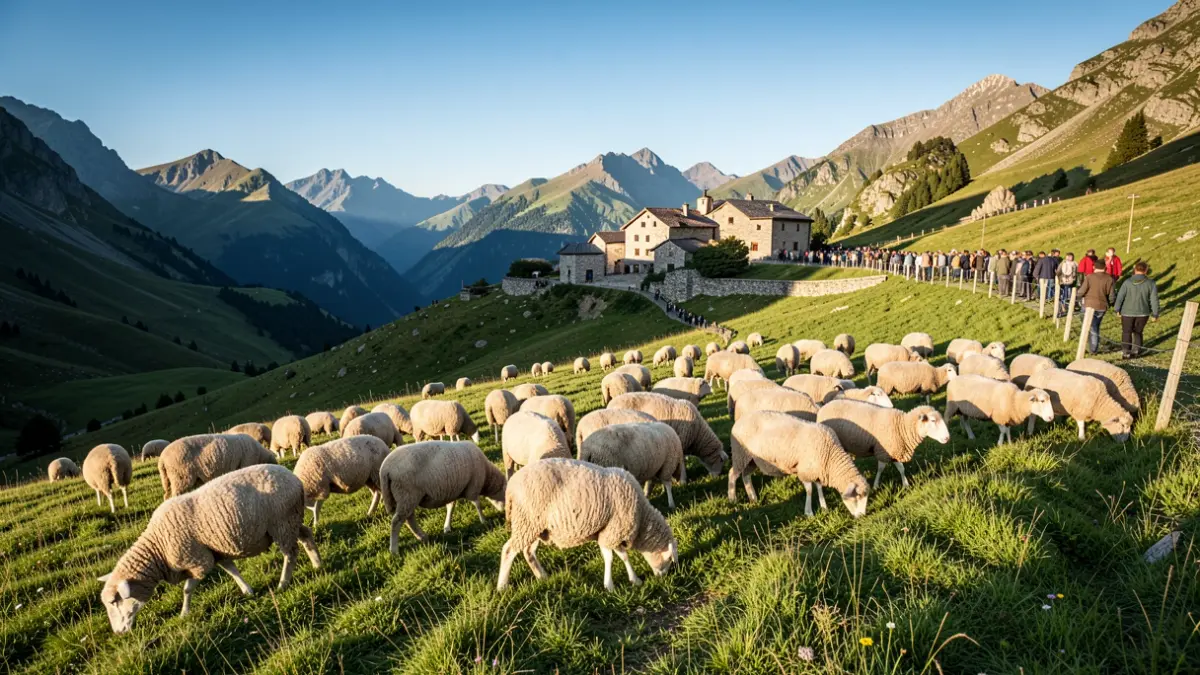
The livestock, belonging to Casa Pubill d’Areny, will remain in the mountains of Barruera for several weeks to graze before returning to their origin. This movement, known as 'trasterminancia', covers a distance of less than 100 kilometers.
Currently, few transhumant flocks remain in the Pyrenees, predominantly sheep, while cattle and horse herds are only testimonial. Sheep flocks typically travel along ancient drove roads from the plains of Lleida to the mountains, crossing various regions of Aragon and Catalonia.
The largest flocks undertaking longer journeys are those of Llobeto de Cardet, in the Vall de Boí, and Sarrado, in Castanesa (Aragonese Ribagorça), covering over 100 kilometers in approximately seven days.
Shepherds and farmers express concern over the poor condition of some sections of the drove roads and, particularly, over disused or damaged water sources, which hinder the animals' access to water in hot years like the current one.
The mountain areas most frequented by flocks during the summer include those of Durro and Taüll, Castanesa and Mulleres, as well as Llessui and Montsent, and Beret and Barradós. However, most flocks are transported to summer pastures by truck, a faster but more expensive method.