Aranese institutions argue that the process has violated the mandate of the Special Regime Law of the Aran Valley and that there is a lack of understanding of the territorial reality and the viability of certain renewable energies in the region. They consider that the PLATER's processing has ignored the institutional and competitive uniqueness of the Aran Valley, denouncing that effective participation from Aran has not been guaranteed, despite its determinations directly impacting the territorial, environmental, and energy planning of the Aran Valley.
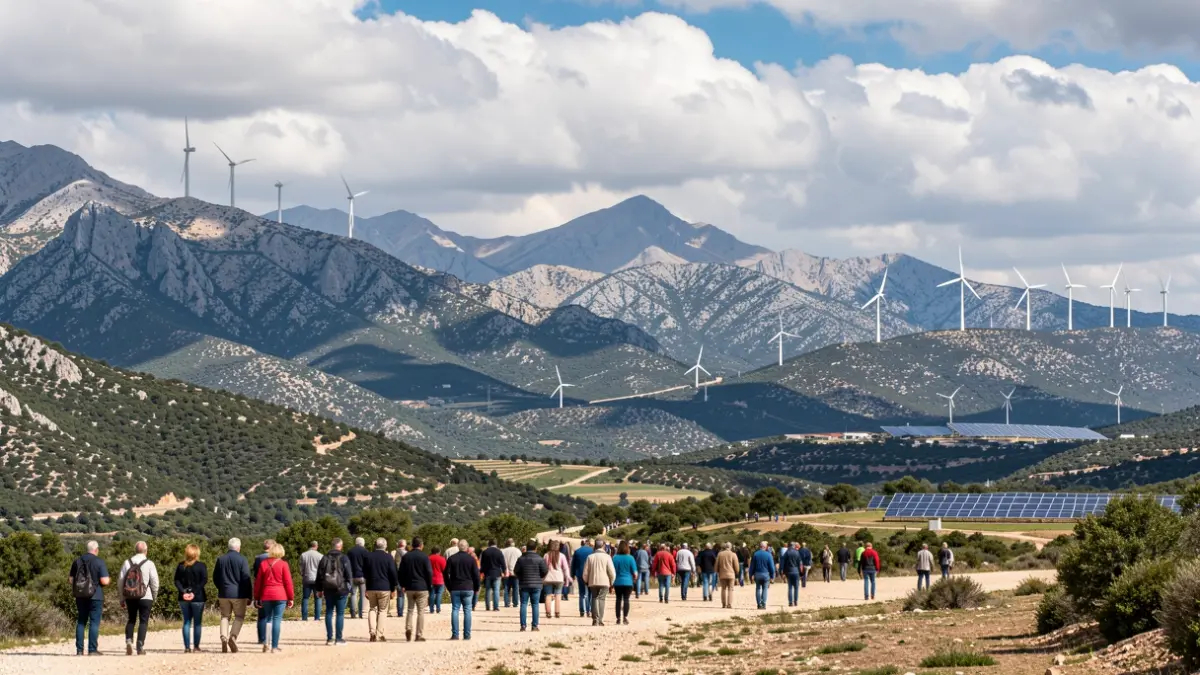
The objection points out that the PLATER does not take into account the physical, climatic, and operational limitations that characterize the Aran Valley. Although the Plan's methodology recognizes that these factors must be decisive when evaluating the suitability of territories for the implementation of renewable energies, the Valley's orography, steep slopes, mountain climatic conditions, access difficulties, and electrical connection limitations make it an unsuitable territory for the massive deployment of wind and photovoltaic parks presented by the PLATER.
Aranese institutions also denounce that the PLATER ignores the main planning and protection instruments of the territory, such as the Partial Territorial Plan of Alt Pirineu i Aran, the Urban Planning Master Plan of the Aran Valley, and the Landscape Catalog of Alt Pirineu i Aran. They also mention the declaration of the Aran Valley as a UNESCO Biosphere Reserve. These instruments establish a territorial model based on the preservation of the landscape, natural spaces, and environmental values, which is incompatible with a generalized implementation of these types of infrastructures.