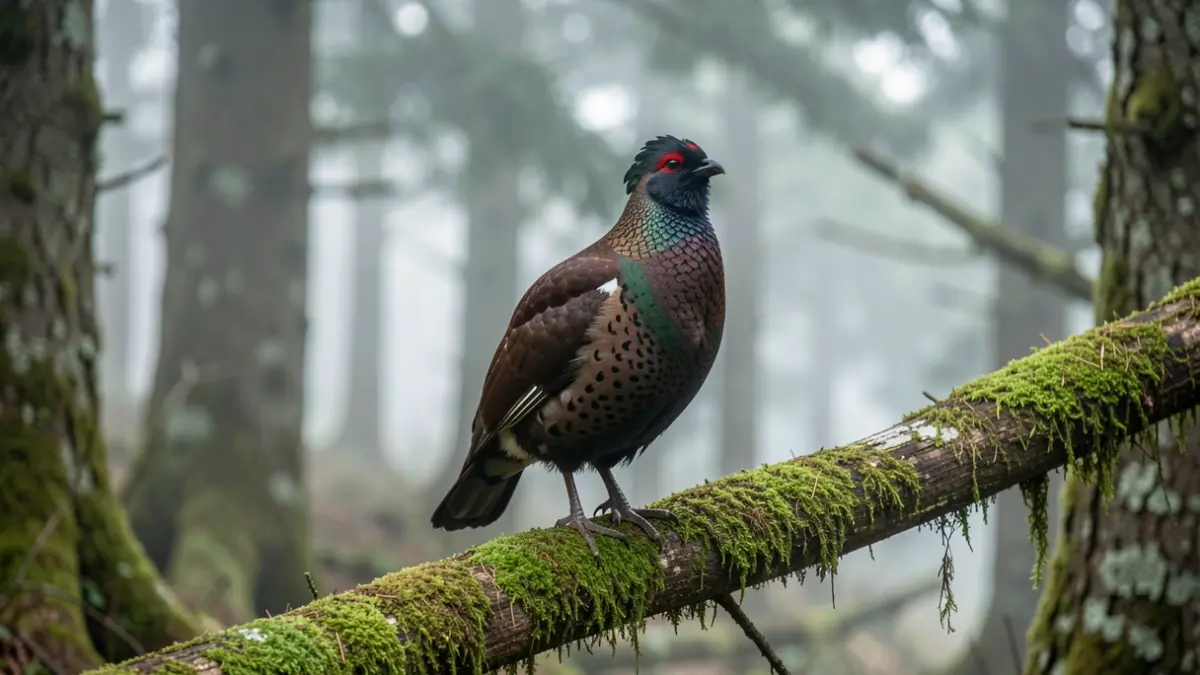
The capercaillie, also known as the wood grouse or wild cock, is in a critical situation in the Pyrenees, with numbers declining year after year. The 245 males still inhabiting Catalan forests represent less than half of the specimens recorded 20 years ago, jeopardizing the species' survival.
To try and halt this decline, the Generalitat and the Conselh Generau d'Aran have intensified surveillance and monitoring efforts this spring. A new measure involves monitoring the males' display grounds, crucial for attracting females during the mating season. Cameras will be installed to detect unauthorized access to these sensitive areas, with warning signs indicating video surveillance.
The so-called "lekking sites" are where males gather to attract females. Any disturbance by humans or predators can severely disrupt the reproductive process. Therefore, efforts are focused on protecting these areas. "Access can be controlled. Awareness campaigns will also be intensified regarding the impact that activities like clandestine photography can have on mating dynamics," explains Ivan Afonso, head of the Environment Area at the Conselh Generau.
The capercaillie has a greater than 50% probability of extinction in the next 40 years if threats are not mitigated. The last general census, conducted in 2025, revealed an annual population loss of 3%. According to Afonso, "the Val d'Aran and the upper Pallars region are where the species is still holding on, but in some areas of the Pre-Pyrenees, it has already disappeared."
In addition to human presence, predators such as the pine marten, stone marten, and red fox pose another significant threat. The possibility of providing alternative food sources to these animals is being studied to reduce their consumption of capercaillie eggs and increase chick survival. This measure has proven effective in Scotland, increasing survival rates by up to 130%.
Current Catalan regulations impose fines of up to 3,000 euros for intentionally disturbing endangered species like the capercaillie.