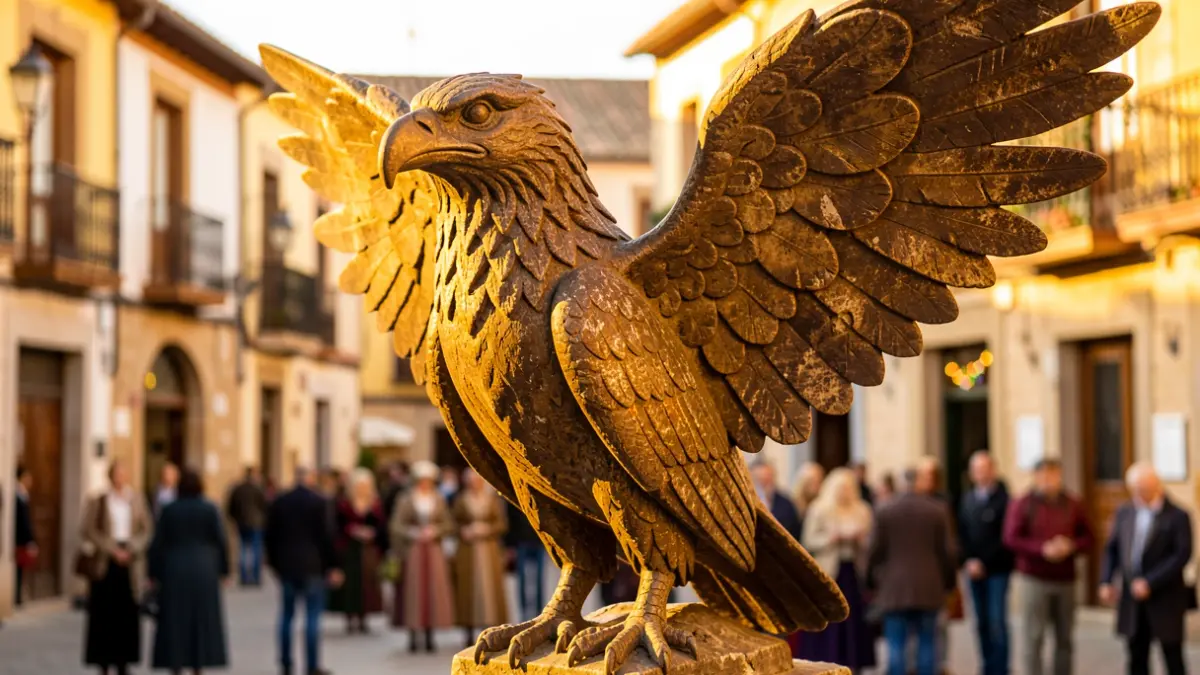
The Col·lectiu Reusenc d'Activitats Culturals (CRAC), founded in 1995, spearheaded the revival of the Reus Eagle, a creation by Manel Llauradó. This initiative, undertaken with the entity Carrutxa and presented in 1996, now reaches its 30th year. The celebration coincides with the discovery of a document placing the Eagle at the Sant Pere Major Festival in 1626, marking 400 years since its first documented appearance.
Pere Latorre, the Eagle's group leader, expresses his honor in celebrating these three decades, highlighting the figure's role as a civic symbol. He emphasizes that the Eagle's importance is intrinsically linked to the festive procession, as it accompanies authorities, guards the Saint's image, and is the only element permitted to dance inside the Santuari de Misericòrdia.
“"It is a great honor to be able to celebrate these 30 years, especially seeing the symbol it has become in the city."
Latorre attributes the figure's success to a combination of "people eager to carry it and people eager to enjoy," along with "relentless musical accompaniment" thanks to compositions by Jesús Ventura. He maintains that the essence of the project, launched over 30 years ago, remains intact: being a group of friends aiming to have a good time and bring joy to people during the Major Festival. Generational succession has not altered this philosophy, and Latorre is confident in celebrating many more years.
The strong bond among the group members is another highlighted aspect. Latorre describes the relationship as that of friends who, despite distance, easily reconnect to make the Eagle dance. In the days leading up to the Major Festival, members experience "a mix of nerves and pride" for the year's most significant performances.
Among the most anticipated events are the long dance in the Plaça del Mercadal and the Completes procession on June 28th. Latorre, who has been part of the group for 23 years, recalls his enthusiasm since the Eagle's presentation in 1996.
The recent documentary discovery placing the Eagle at the Sant Pere Major Festival in 1626, 400 years ago, adds a new dimension to the celebration. This record, mentioning payment to a dancer to make the Eagle dance during celebrations for the transfer of Saint Peter's relic, solidifies the figure as one of the city's longest-standing historical elements. Although no specific events have been announced yet, the group expresses its desire to commemorate this double anniversary.