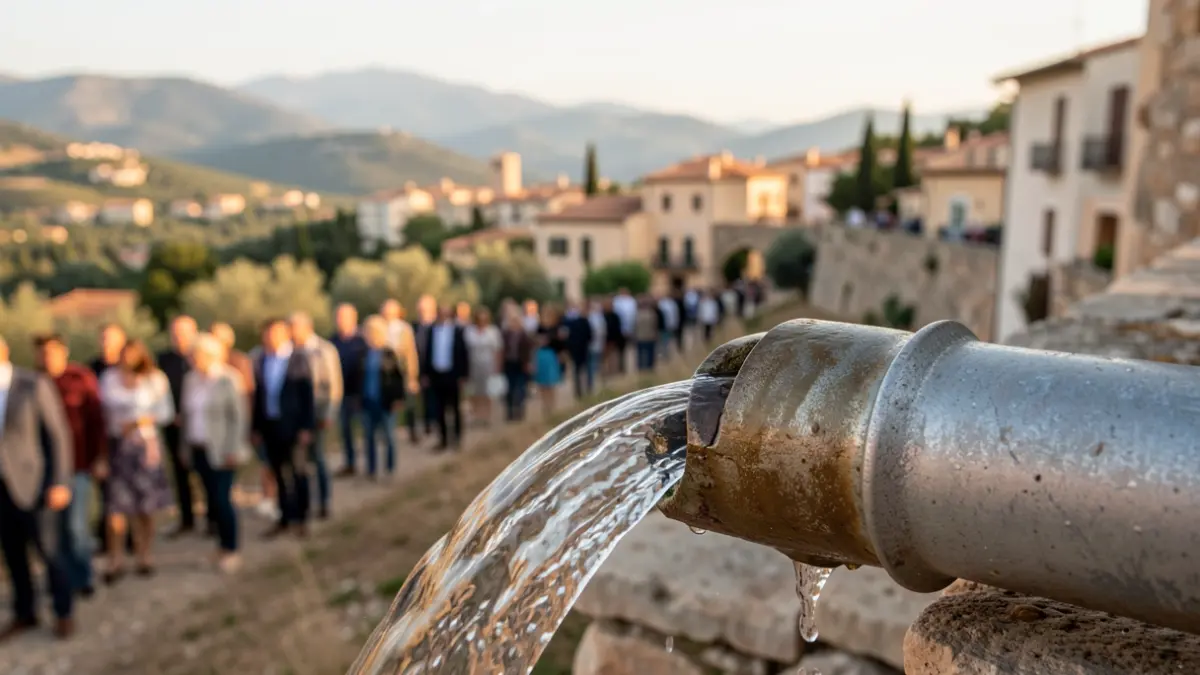
This figure, which significantly surpasses records from the most intense drought years, is attributed to the rains at the beginning of the year and investments made in recent years to recover and improve the utilization of local water resources. Between January and June, 1,234,783 cubic meters of groundwater were consumed.
Groundwater resources are variable and dependent on climate. The percentage is expected to decrease in the second half of the year if new rainfall episodes do not occur. Councillor responsible for the service, Daniel Rubio, emphasizes that investments have better prepared the city to leverage this local resource.
Aigües de Reus has prioritized the recovery of water sources such as the mine in the Fortuny neighborhood and the old mine of Almoster, as well as wells in Bellisens, Mas Miarnau, the airport, and Agro Reus.
The utilization of groundwater has a long tradition in Reus, with wells, norias, and mines used for centuries. The profession of miner was particularly important between the 18th and 19th centuries, demonstrating the popular ingenuity of the Camp de Tarragona region.
Historic mines like those of Monterols and Hidrofòrica continue to be part of the public supply system. The recovery of the old mine in the Fortuny neighborhood now allows non-potable water to be used for irrigating various green spaces and filling swimming pools, as well as compensating for losses and filter washing.
Other initiatives include the recovery of the Mas Beltran mine for irrigating urban gardens on Astorga street, as part of the RenaturReus project. The old mine of Almoster has also been interconnected with the city's water treatment plant to irrigate new green areas and supply the potable water network.
The recovery of wells such as those in Bellisens (with a capacity of up to 150,000 liters per hour) and Mas Miarnau (built in 1933) also reinforces the commitment to local resources. These wells, along with those at the airport and Agro Reus, are integrated into non-potable water distribution networks for municipal and industrial uses.