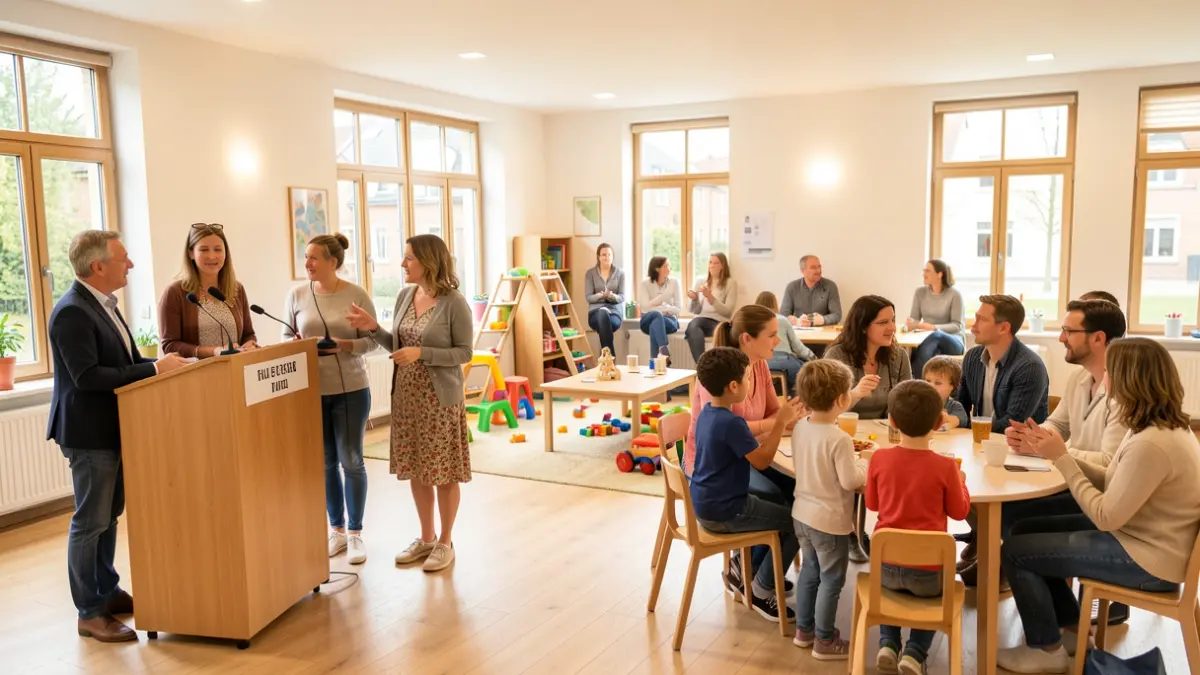
The Espai Boule in Reus served as the venue for the international training program, which over three days facilitated the exchange of ideas and discussion on new educational models in Europe. This initiative, promoted by the Reus-based association Open Europe, saw participation from representatives from Bulgaria, Greece, Hungary, Portugal, Romania, Turkey, and Finland, in addition to participants from Catalonia.
In total, 36 educational leaders, teachers, and researchers, specializing in innovative and inclusive methodologies, took part in this international mobility. The project's impact extends beyond the in-person meeting, as each professional is tasked with transferring the knowledge and strategies acquired in Reus to their respective territories, aiming to train hundreds of educators across the continent.
During the working sessions, participants explored sustainable and digital strategies to apply the competencies of the European GreenComp framework. Special emphasis was placed on complex school environments, such as rural areas or those at risk of segregation. The meeting also included practical workshops on designing inclusive learning environments and creating 'Laboratories with children and families', seeking to make sustainability an open and accessible community practice.
With the conclusion of the sessions, participants return to their countries with new action plans and shared pedagogical tools. Their stay in Reus has solidified the idea that 21st-century education must be greener, more inclusive, and more connected to social reality.