Catalunya, a region with 62% of its surface covered by forests, has experienced 271 forest fires to date, affecting approximately 122 hectares, of which 54 were wooded areas and 67.7 were non-wooded. Over the last decade, large forest fires (GIF) have been responsible for 66.6% of the total burnt area. Between 2016 and 2026, over 61,700 hectares have been burnt, exacerbated by extreme drought events. 39.8% of the burnt area is wooded forest, while the rest consists of scrubland, pastures, and non-forest areas.
The most critical years, with alarming records of burnt hectares due to heatwaves and accumulated drought, have been 2012, 2019, 2022, and 2025. The most affected regions are Alt Empordà, Ribera d'Ebre, and Segarra. In the Terres de l'Ebre, two major fires have occurred in the last decade: the Ribera d'Ebre fire in 2019 (6,000 hectares burnt, starting in Torre de l'Espanyol due to a manure pile under extreme drought conditions and abandoned fields) and the Baix Ebre fire in Paüls in 2025 (3,200 hectares, with virulent episodes requiring lockdowns and causing the death of a firefighter).
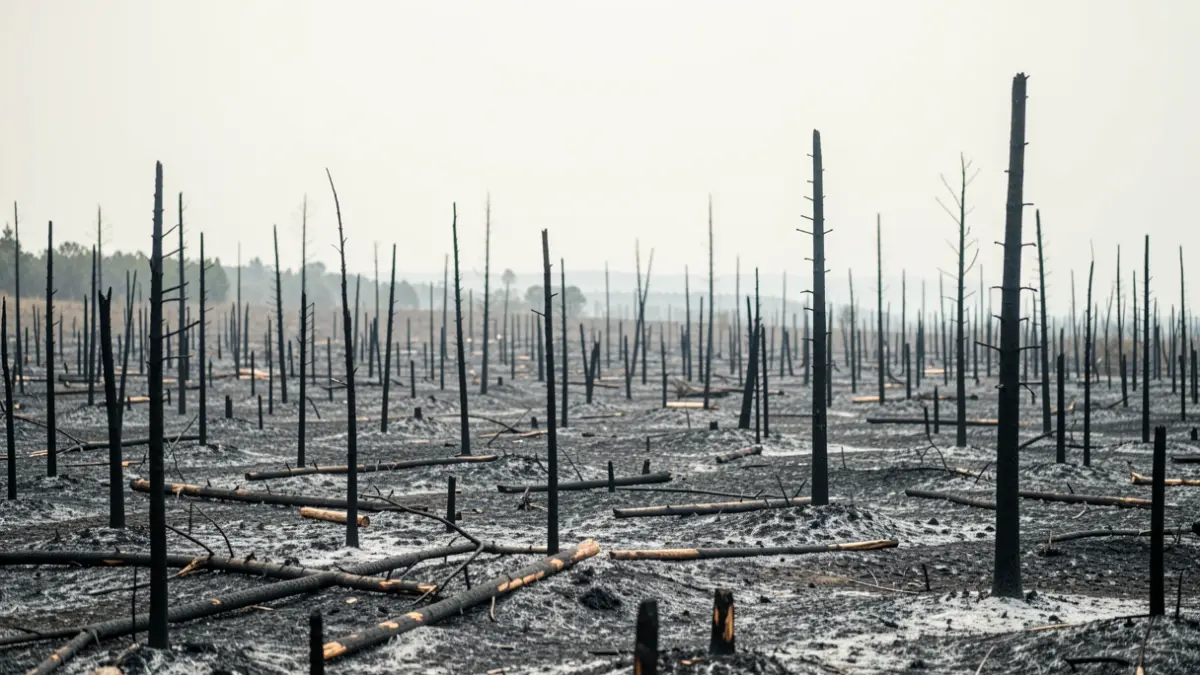
In the first months of 2026, an increase of over 67% in small and medium-sized vegetation and scrub fires has been observed compared to the previous year. Burnt land, covered in ash and unprotected, becomes fragile, prone to erosion, and loses vital nutrients. Natural recovery requires years of tranquility, with nature employing strategies such as regrowth from roots or fire-resistant seeds.
Preventive forest management is key. It's not just about cleaning, but also about promoting native Mediterranean species like holm oaks or strawberry trees, which are more fire-resistant than pine forests. Lack of public awareness and human negligence are major causes of fires. Selective management, as argued by Jaime Baeza, professor of environment, reduces the risk of spread. Conserving some of the burnt wood helps maintain organic matter and protect the soil.
Integral forest management, combining scientific knowledge, citizen participation, technology, and public policies, is essential for maintaining healthy and resilient forest ecosystems. The priority is to reduce combustible material, clear undergrowth, create firebreaks, and reforest with fire-resistant species. Forest abandonment and lack of management, along with adverse weather, are key factors in the increase of fires, 90% of which are caused by human factors.
Public administrations must prioritize forest management and prevention to prevent the landscape from turning grey ash. The recovery of the agroforestry mosaic, extensive livestock farming, and strategic infrastructure contribute to creating safer landscapes and more resilient forests. Nature's wisdom in its regeneration is a slow but constant process.