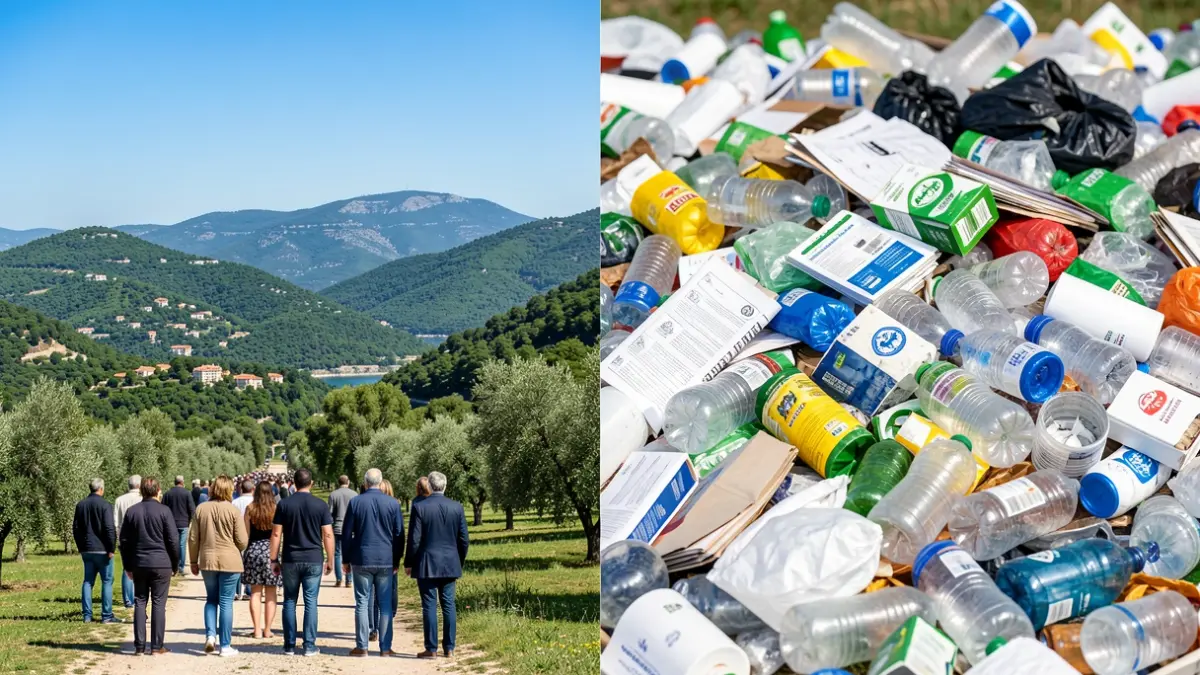
Baix Empordà has reached a significant milestone in waste management, exceeding 50% in selective waste collection. With a rate of 52.1% recorded in 2024, the region surpasses the Catalan average of 47.1%, according to the latest data from the Catalan Waste Agency (ARC). Despite this progress, the figure still falls short of the targets set by the European Union, which mandate 55% recycling by 2025.
There are notable differences among the municipalities within the region. Verges leads the ranking with a 93.85% recycling rate, followed by Albons at 93.13% and Corçà at 90.67%. These three municipalities are distinguished by their implementation of the door-to-door collection system, a model that Verges and Corçà adopted in 2018 and Albons in 2020, making them pioneers in the region.
Conversely, municipalities such as Torrent (31.44%) and Fontanilles (31.14%) do not reach 40% in recycling, according to ARC data.
The door-to-door collection model is gaining traction in Baix Empordà. Municipalities like Calonge i Sant Antoni and Pals are expanding or implementing this system. In Calonge i Sant Antoni, door-to-door collection began in 2019 and has been progressively extended, now combined with smart bins accessed via card in tourist areas. Pals, on the other hand, started implementing it last June in its main town and scattered areas, reporting an estimated 30% reduction in residual waste during the first month.
The improvement in recycling rates aligns with European legislation requiring the actual cost of the service to be reflected in the waste fees paid by citizens. Town councils, such as Begur, have introduced fees with a fixed and a variable component, calculating costs based on services used and the level of waste separation to ensure a more equitable charge.
The most recent data from the Catalan Waste Agency, pertaining to 2024, also details the kilograms of waste produced per inhabitant annually in each municipality of Baix Empordà.