The Department of Territory, Housing, and Ecological Transition has tendered works to install 50 shelters at interurban bus stops in the Girona region. The minister, Sílvia Paneque, highlighted that these new shelters will incorporate photovoltaic panels, improve information systems, and offer greater comfort to users.
These shelters are part of a new model that the Government plans to extend throughout Catalonia in the coming years to enhance public transport services. The work is expected to commence in the first half of next year.
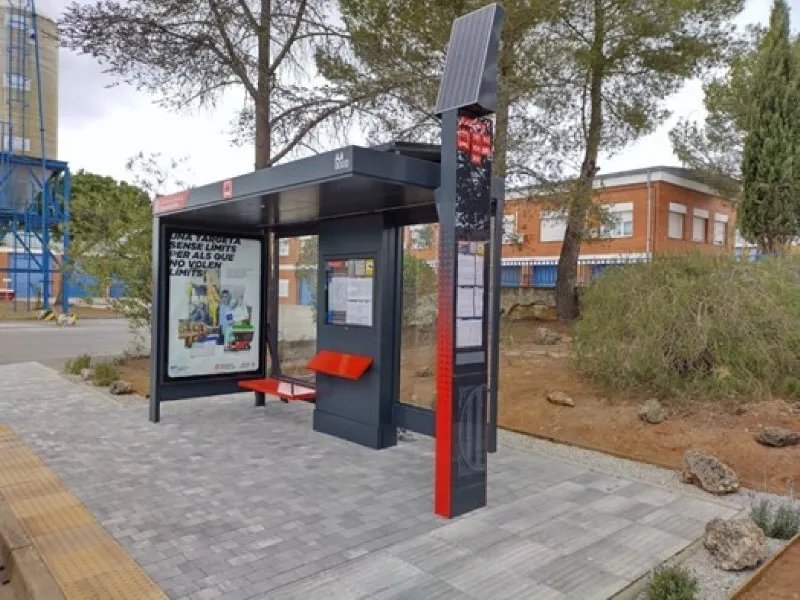
The new shelter model features a modern, comfortable, and attractive design, incorporating accessibility, sustainability, and adaptability criteria. It includes connection to accessible pedestrian routes, an access width of 1.80 meters, tactile paving, Braille information, an adapted bench, bird-friendly glass, efficient lighting, use of recyclable materials, and photovoltaic panels.
They also offer capacity for seated and semi-seated individuals, improved passenger information systems, comfortable amenities, a secure environment, and a modular structure adaptable to various site conditions.
The 50 new shelters will be installed in various municipalities within the Girona region, including locations in Alt Empordà, Baix Empordà, Gironès, Ripollès, and la Selva.
Minister Paneque emphasized that mobility and public transport are key priorities for the Generalitat, and that efforts are underway to improve infrastructure, such as new bus stations and service enhancements.
The works also encompass the adaptation of the surrounding areas of the stops to reinforce safety, accessibility, and urban integration. The planned execution period is 10.5 months.