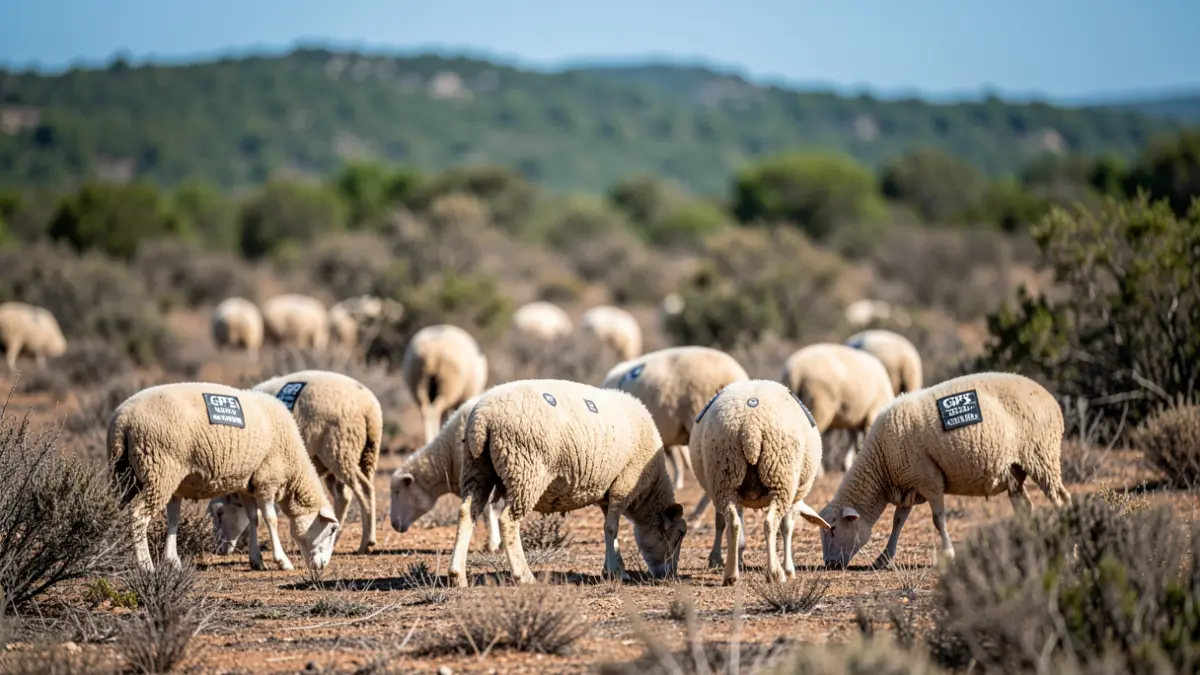
Two innovative initiatives in the Girona regions, Albera and Baix Empordà, are using GPS technology to guide herds of cows and goats in preventing forest fires. These animals, equipped with GPS sensor collars, graze in strategically marked virtual areas, creating vegetation mosaics that help reduce forest biomass.
The Centre d’Investigació Ecològica i Aplicacions Forestals (CREAF) is conducting a pilot test with Albera cows in Requesens. In parallel, the company Pasturabosc, in Gaüses (Vilopriu), is applying a similar system with goats in Baix Empordà, as part of the Ramats de Foc project.
The system involves GPS collars connected to a mobile application. Herders virtually mark the desired grazing perimeters. If an animal approaches the boundary, it receives an audible warning and, if it persists, a mild electric shock to make it retreat. This allows herders to monitor the animals at all times and saves the effort of setting up physical enclosures.
This directed silvopasture technique allows for intensive and rotational management of areas, preventing overgrazing and enhancing biodiversity. Goats, for instance, act as natural undergrowth clearers, particularly in wooded areas where manual management is challenging.
Experts like Marc Castellnou, head of the Forest Action Group (GRAF) of the Bombers de la Generalitat, have long advocated for the importance of rural life and land management in fire prevention. They emphasize the need for a model shift towards an agricultural and forest mosaic, where livestock plays a crucial role.
Beyond fire prevention, the animals also generate added value. In Gaüses, goat milk is used to produce cheeses and yogurts, contributing to the revitalization of rural areas. The Albera cow, an autochthonous breed, also benefits from these initiatives, which aid in its preservation.
Both initiatives are part of broader projects such as Life Pyrenees4Clima and Life Midmacc, which aim to improve landscape management and climate change adaptation, demonstrating how silvopasture can be a key tool in reducing the risk of forest fires.