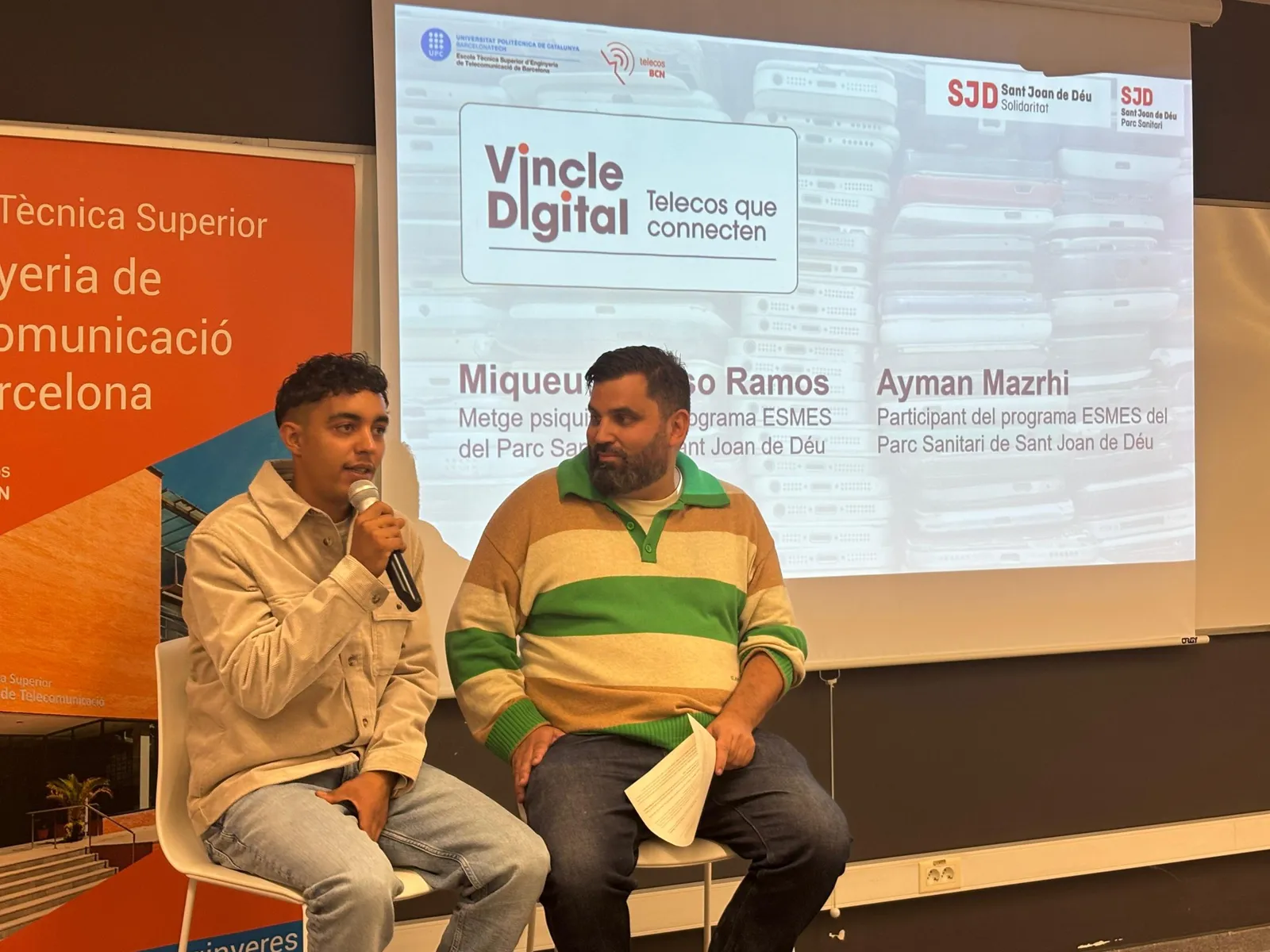
The project stems from a need identified by professionals from the Mental Health Team for Homeless People (ESMES) at Parc Sanitari SJD, as the lack of a phone hinders healthcare contact, medical follow-ups, administrative procedures, and the maintenance of social ties.
The initiative aims to foster personal autonomy, social inclusion, and continuity of healthcare through the free donation of reused mobile devices. Dr. Miqueu Alfonso, a psychiatrist at ESMES, emphasizes that the demand originated from the individuals being served, highlighting the importance of two-way communication to address their real needs.
Dr. Yolanda Osorio, head of the mental health area for the ESMES and SATMI programs, notes that providing a mobile phone not only reduces the digital divide but also strengthens connections, continuity of care, and the ability to ask for help, aligning with the Parc Sanitari's community-based care model.
The testimony of Ayman Mazrhi, a user of Parc Sanitari SJD, reflects the initiative's impact: 'A mobile phone for someone living on the street is a tool to move forward,' enabling family contact, medical appointments, administrative tasks, training, and the possibility of stable employment and housing.
The project is integrated into the ESMES and SATMI programs at Parc Sanitari. The UPC collects and refurbishes devices, the Obra Social de Sant Joan de Déu coordinates their distribution, and the Parc Sanitari identifies beneficiaries and provides follow-up. The initiative also promotes device reuse and environmental sustainability.
The project was presented on November 18th at the UPC and includes a campaign to collect disused Android mobile phones at the university's campuses. The ETSETB, with volunteer students from the Associació d’Universitaris per a la Cooperació (AUCOOP), has developed a guide and an app to facilitate factory resets of the devices.