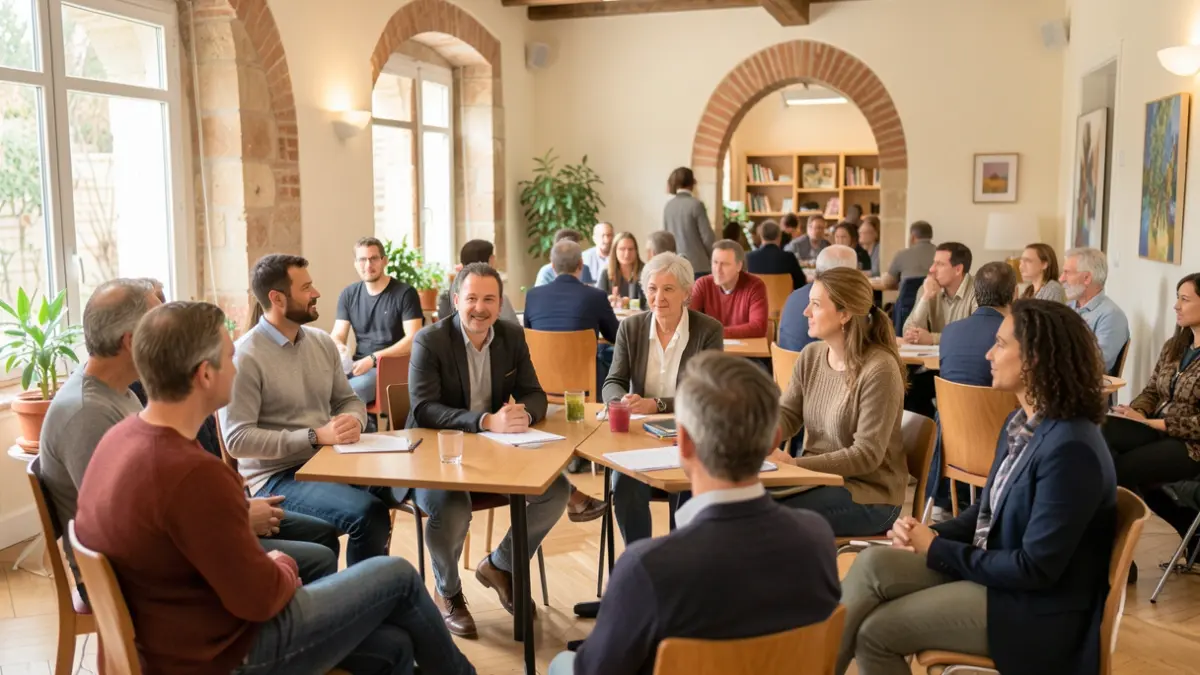
The closing event of Mental Health Week 2026, hosted at the Parc Sanitari Sant Joan de Déu, highlighted the need for a community mental health model that is closer, more integrated, and connected to society. Professionals, public administration representatives, and individuals with lived experience agreed on the importance of early intervention and co-designing support pathways with users.
The current challenge for therapeutic communities is to support individuals throughout their life projects, not just during acute episodes. This requires enhanced coordination between health, social, educational, and community services, addressing factors such as housing, economic precarity, loneliness, and employment integration, all of which significantly impact mental well-being.
The active participation of service users in designing support systems was advocated, alongside the value of mutual aid groups and peer-to-peer initiatives in fostering recovery and inclusion. The statement "admission repairs, but community care heals" encapsulated the importance of maintaining connections beyond acute situations.
International community models and local initiatives integrating mental health, primary care, and social services were presented. The potential of artificial intelligence to reduce administrative burdens, allowing professionals more time for therapeutic accompaniment, was also discussed.
The conference concluded a week that attracted over 1,400 participants, aiming to rethink mental health care through the lens of rights, personalization, and proximity. Antoni Serrano, Director of Mental Health at the Parc Sanitari Sant Joan de Déu, emphasized the paradigm shift: "from symptom to person and their context, from diagnosis to needs and life projects, and from the hospital as the center to the community as a space for life".