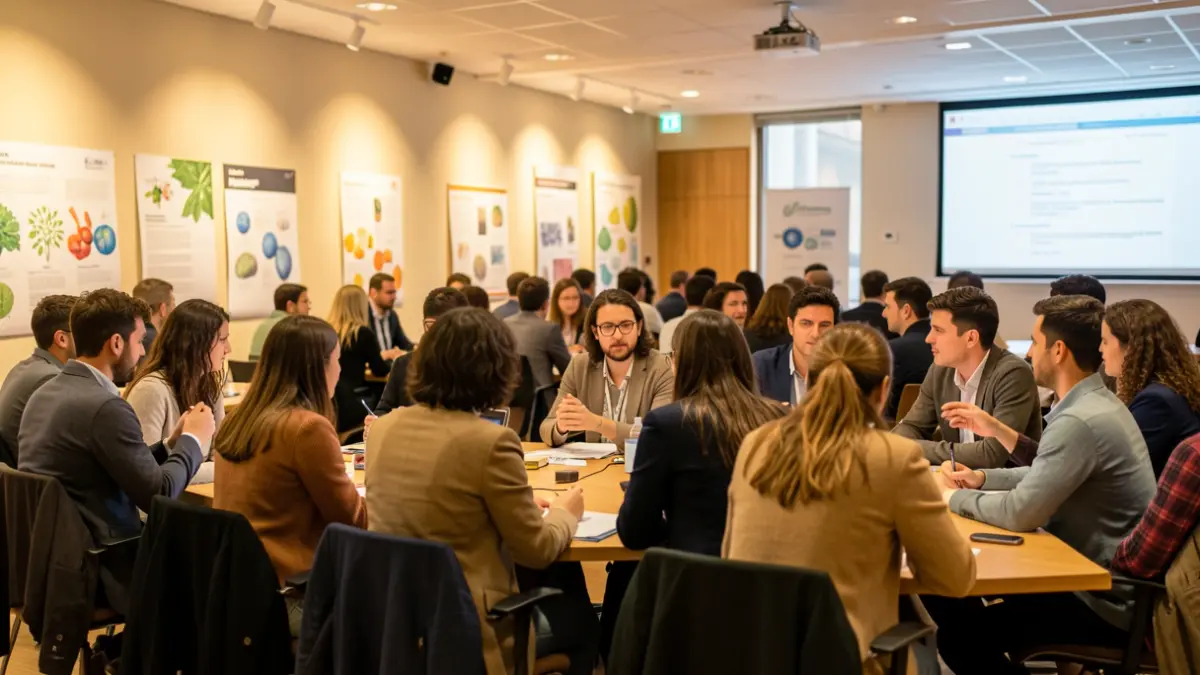
Barcelona hosted the international AI Co-Fly conference on September 18-19. This initiative, held at the Botanical Institute of Barcelona (IBB, CSIC-CMCNB), focused on exploring the possibilities of artificial intelligence and citizen science in biodiversity monitoring and adaptation genomics.
The event gathered a diverse audience, including high school and university students, faculty, researchers, specialists in artificial intelligence and biodiversity, and professionals in scientific communication and citizen science from various parts of Spain and other European countries. The main objective was to share experiences, tools, and knowledge to incorporate artificial intelligence into biodiversity research and monitoring in a useful, critical, participatory, and accessible way.
Over a day and a half, presentations and debates addressed the possibilities and limitations of artificial intelligence in areas such as genomic research, insect identification and monitoring using computer vision and machine learning, disease vector surveillance, and advanced computing applied to biological and environmental data.
A central theme was adaptation genomics, which analyzes how species respond evolutionarily to factors like climate change or urbanization. The application of artificial intelligence to biodiversity monitoring using tools such as computer vision, drones, and large-scale computing was also highlighted.
Researchers from various institutions, including the Botanical Institute of Barcelona (CSIC-CMCNB), the Institute of Evolutionary Biology (CSIC-UPF), the Barcelona Supercomputing Center, the Autonomous University of Barcelona, the University of Valencia, and the UK Centre for Ecology & Hydrology, presented their projects.
The Botanical Institute of Barcelona featured contributions from Josefa González, Gerard Talavera, and Javier Temes. Josefa González also participated in the expert panel discussing the role of citizen science in generating scientific knowledge.
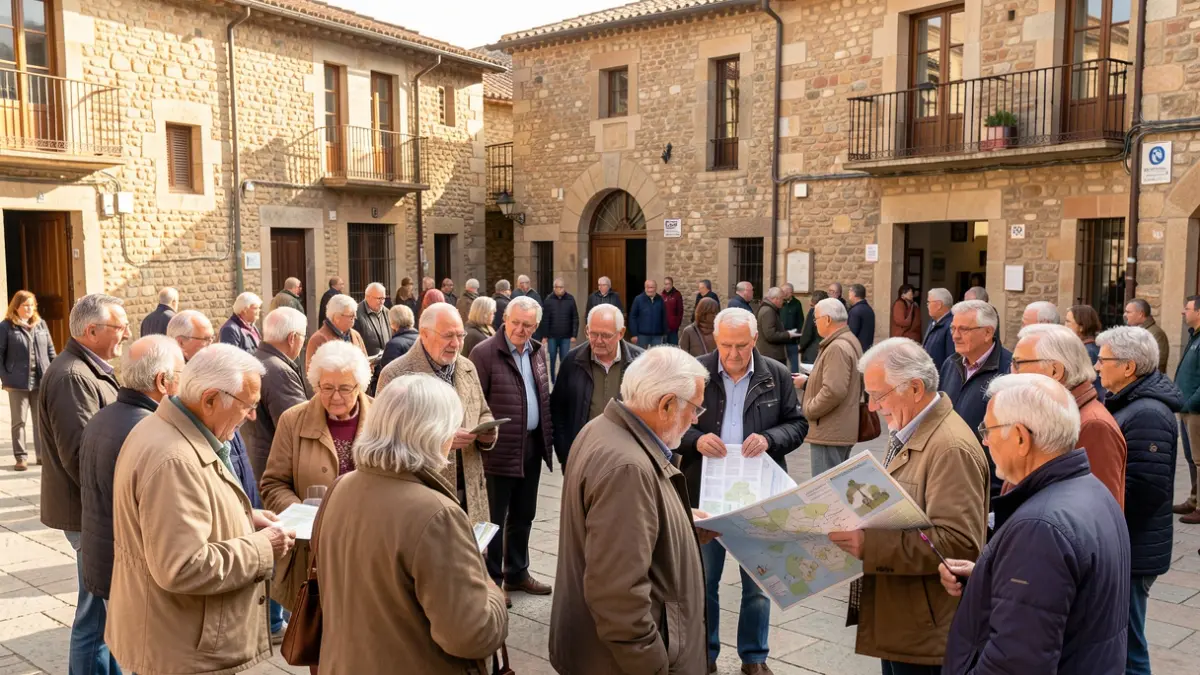
Citizen science was a central theme of AI Co-Fly, showcasing experiences where students, faculty, and volunteers collaborate in collecting, classifying, and analyzing biodiversity data for international research.
The conference also included activities related to Kit for Kids, an initiative by the INSECT AI network to develop accessible educational tools for children and young people on insects, biodiversity monitoring, and artificial intelligence. Saturday's session allowed families and children to experiment with developed prototypes.
AI Co-Fly is part of the Melanogaster Catch The Fly! (MCTF) project, driven by the Botanical Institute of Barcelona (CSIC-CMCNB), the association La Ciència al Teu Món, and the Autonomous University of Barcelona (UAB), with support from the Spanish Foundation for Science and Technology (FECYT), the Ministry of Science, Innovation and Universities, DrosEU, the COST Action INSECT AI, the Barcelona City Council, and the INNOCAM program of the Government of Castilla-La Mancha.
Melanogaster Catch The Fly! is an international citizen science project dedicated to studying biological adaptation through genomics, bioinformatics, and citizen participation, connecting students, faculty, and local communities since 2016 in collecting and analyzing biodiversity data within the European DrosEU network.