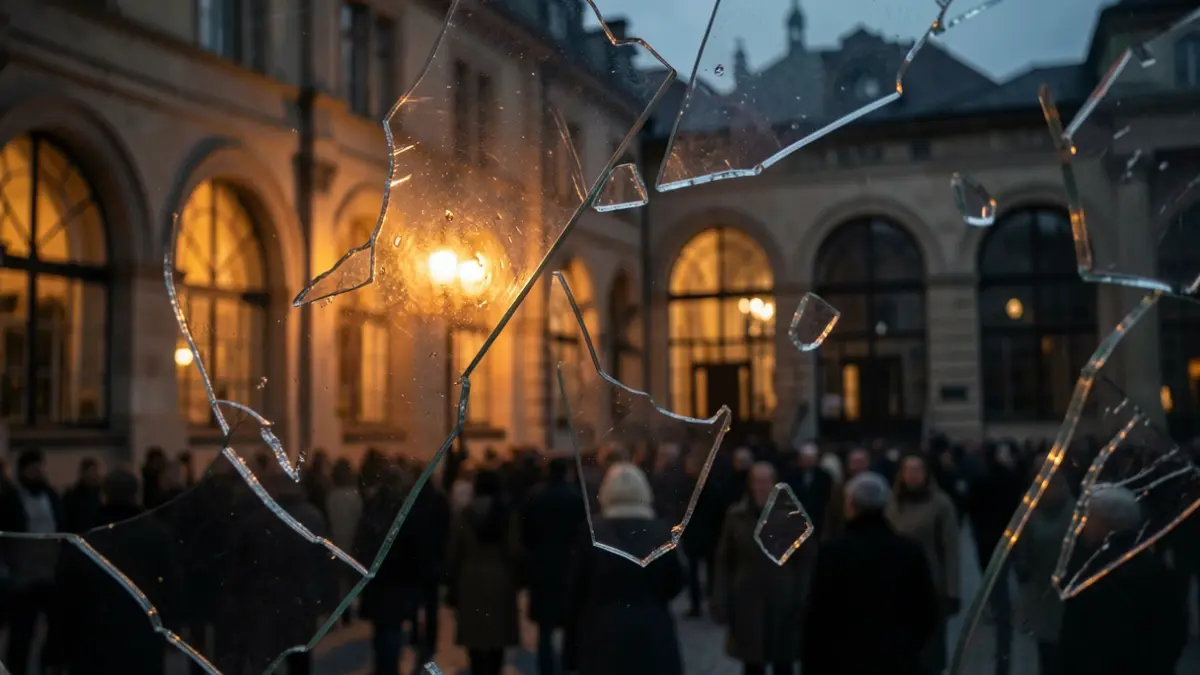
The city of Barcelona today, November 9th, remembered Kristallnacht, the Night of Broken Glass, an event that took place on the night of November 9-10, 1938, in Germany and Austria. The event, organized by the City Council and the city's Jewish communities, served to honor the victims of the Holocaust. On that tragic night, approximately 90 people died, around 30,000 were arrested and sent to concentration camps solely for being Jewish. Over 1,400 synagogues were set on fire, and more than 7,000 Jewish homes and businesses were attacked and destroyed, marking a turning point towards the Holocaust.
The commemoration emphasized the dangers of racism, xenophobia, and hate speech for coexistence, human rights, and democracy. Raquel Gil, the Deputy Mayor for Social Rights, Economic Promotion and Employment, Feminisms and Democratic Memory, highlighted the importance of remembering these events as a "necessary warning" from the past, cautioning against words that divide society, the identification of groups as dangerous, and the ease with which fear can lead to the restriction of rights.
In a context where millions of people continue to be forced to flee their homes, the lecture "Fanny Gewürz, the long flight from Germany to Barcelona after the Night of Broken Glass," by doctor Josep Calvet, stood out for its relevance. The session invited reflection on collective responsibilities, the normalization of certain words, tolerated exclusions, and the borders erected against those in need of protection.
Music played a significant role in the event, with performances by Sara Balasch on violin and Havard Enstad on cello, who presented the pieces "Jewish Prayer," "El Male Rachamim," and "Remembrances."