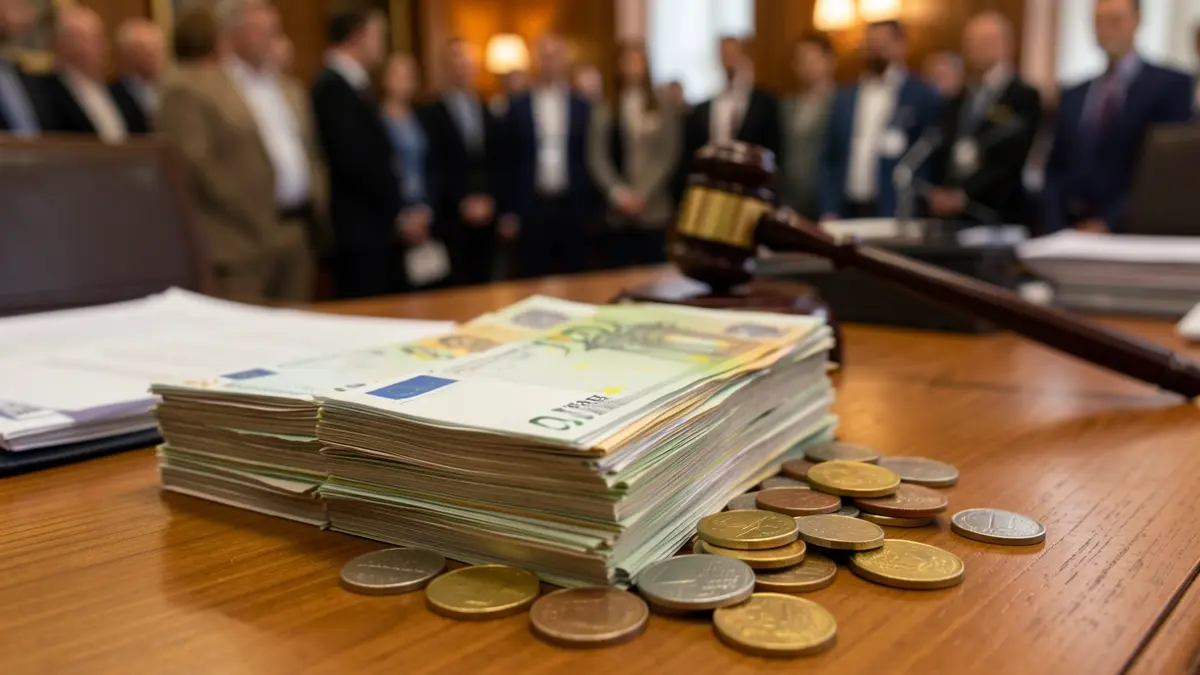
The budget includes the sum of the AMB's own budget (1.357.7 million euros) and that of all its autonomous bodies, commercial companies, consortia, and public companies in which it holds full or majority participation. This own budget will be used to ensure the deployment of the Metropolitan Action Plan 2024-2027.
The initial approval received favorable votes from the groups PSC-CP, Junts per Catalunya, En Comú Podem, ERC, and Vivim Montcada i Reixac. The groups PP, Comprimís i acord per Torrelles, and Junts per Tiana abstained, while Vox voted against.
The main objectives of the 2027 budget align with the strategic lines of the 2024-2027 mandate, prioritizing policies on housing, public transport and sustainable collective mobility systems and services, social and economic development, social cohesion, and the provision of metropolitan services such as water management, waste, and public space improvement.
In a scenario of sustained revenue reduction due to the reform of the metropolitan tax ordinance in 2026, budget allocations are prudent in expense forecasting and financial sustainability, ensuring full operational deployment and the objectives set in the PAM 2024-2027.
The executive vice-president of the AMB, Antonio Balmón, highlighted that "today we approve a realistic budget, technically and politically endorsed, not a budget to go through the motions." He added, "we would be mistaken if we waited for others to solve our problems," emphasizing confidence in the AMB's own strengths and capabilities to finance services.
In terms of housing, actions for affordable housing continue through IMPSOL, protected rental housing via Habitatge Metròpolis Barcelona, SA, and the energy and accessibility rehabilitation of the existing stock, promoted by the Consorci Metropolità de l’Habitatge.
Regarding mobility, public transport services are maintained, and initiatives such as the eco-efficient renovation of the public transport fleet (electrification) and the integration of on-demand and shared transport modes are being developed.
Investment efforts in the management and maintenance of green infrastructure, natural spaces, parks, beaches, river areas, and fire prevention are also maintained. Waste management is reinforced with high-efficiency systems and new management models.
The budget includes significant expenses in infrastructure (30.3 million euros for green infrastructure), housing construction and rehabilitation (88.8 million euros for IMPSOL, 4.6 million euros for the Metropolitan Housing Consortium, and 76 million euros for Habitatge Metròpolis Barcelona), metropolitan ring roads (11 million euros), urbanization of Tres Xemeneies (27.6 million euros), mobility (214.7 million euros for ATM and 224.8 million euros for transport services), waste cycle (232.1 million euros), water cycle (142.3 million euros), climate action (7 million euros), social and economic development (7.5 million euros for social policies and 34.2 million euros for school meal grants), urban policies (5.6 million euros), and international action and digital metropolis (2.34 million euros).