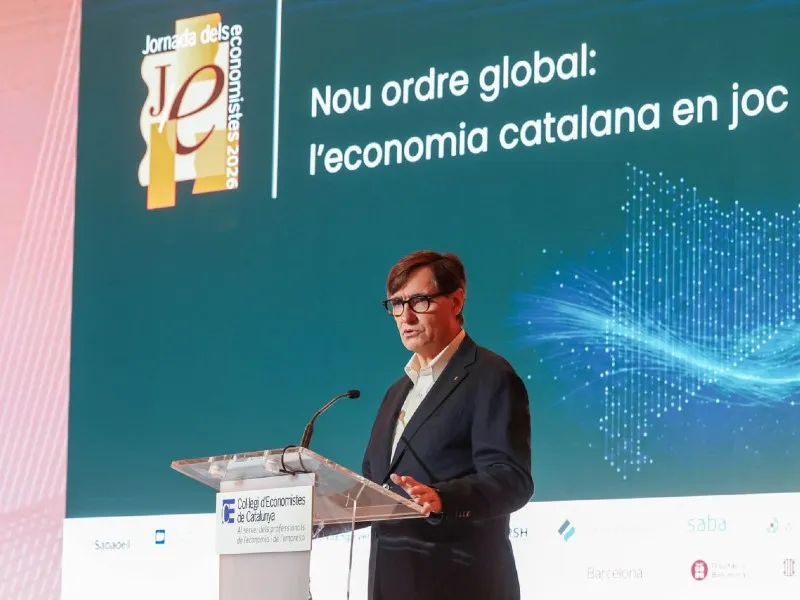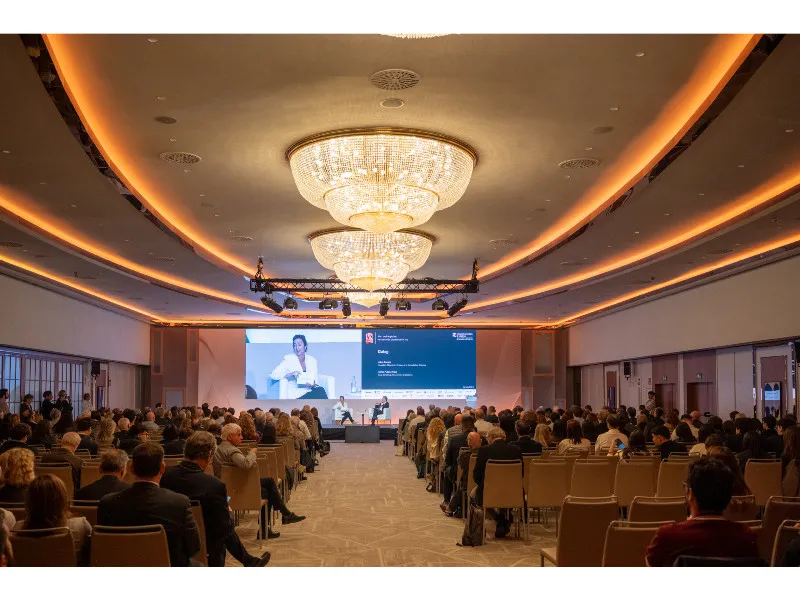
The Minister of Economy and Finance, Natàlia Romero, has stressed the need for Catalan companies to gain scale to become more competitive in a globalized world. During her address at the Economists' Conference in Barcelona, Romero noted that this element is crucial for enhancing productivity, alongside talent and innovation. She recalled that the Government developed the 'Catalunya Lidera' Plan to create the necessary levers for the Catalan economy to lead Spain's and contribute to Europe's response to global challenges.
Romero praised the role of Vocational Training (FP) in shaping future professionals, particularly for an industry aiming for greater robustness. She affirmed that FP is a government priority to meet the needs of the productive sector and called on companies to facilitate dual FP programs, emphasizing the necessity for more young people to study FP and gain practical experience in companies.
Regarding public-private collaboration, the minister explained that the public sector cannot act alone to achieve greater competitiveness. She mentioned the approval of the Generalitat's public-private collaboration strategy, which offers specialized advice to departments. According to Romero, international organizations like the OECD suggest that up to 5% of investments can be saved through well-designed projects and effective collaboration with the private sector.
Finally, Romero referred to the new financing model proposal, which could not be processed in Congress due to the election call on November 29th. She described this issue as key not only for Catalonia but for all autonomous communities, as it funds transferred competencies such as health, education, and social services. She expressed hope that the new government emerging from the elections will process the proposal, which she considers "fairer and more egalitarian" and would provide an additional 4,700 million euros for Catalonia.