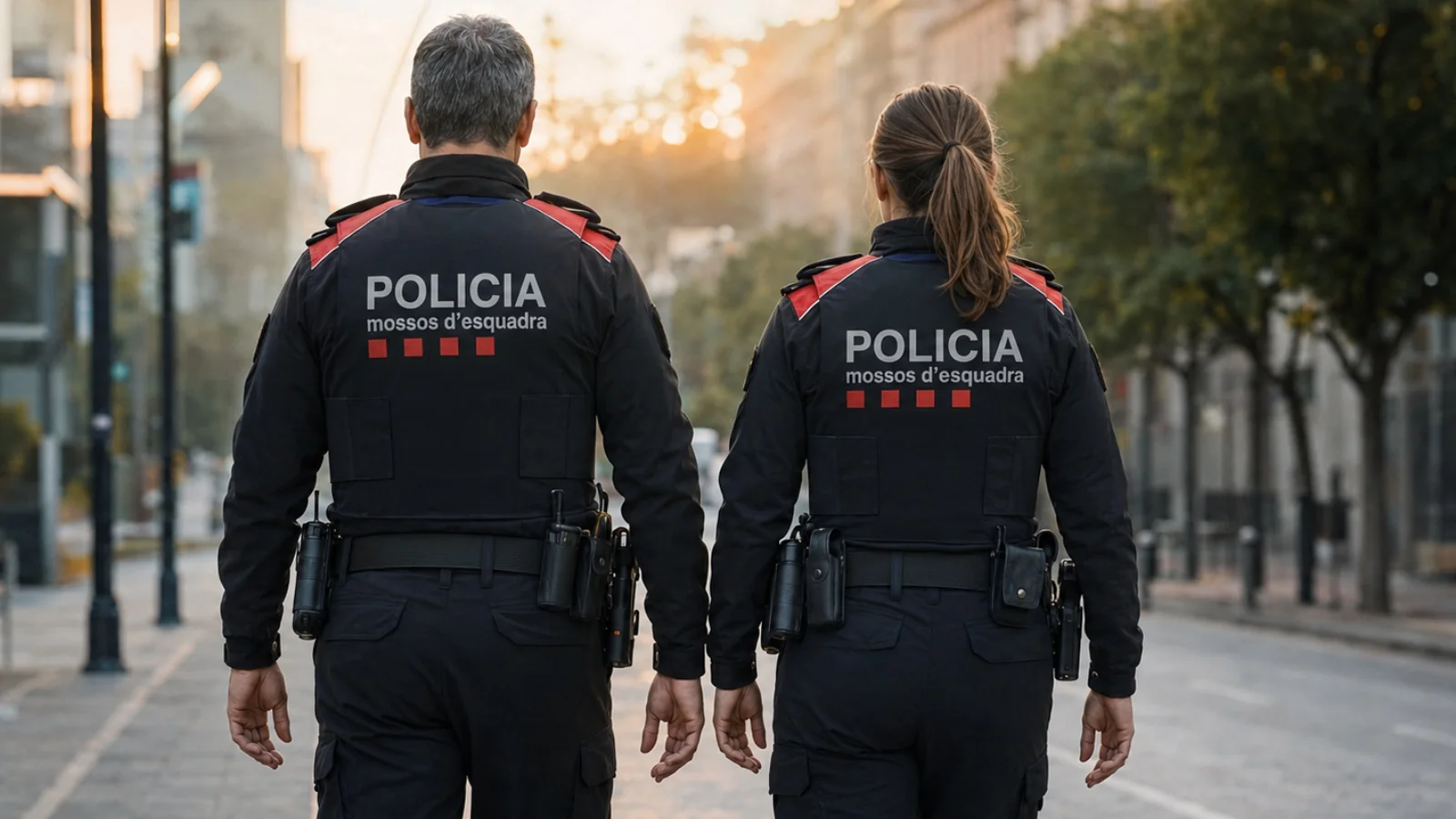
The objective of the plan, formalized by the Government and with financing agreed with the State, is to reach 25,000 agents in staff before the end of the decade, which means incorporating nearly 8,000 new officers in the coming years.
This timeline completely changes the strategy for applicants. Those who did not make it in time for this year's call —the registration period closed on June 22nd— have not missed the train: they have another one in a year's time, with the same volume of places. And those who start preparing now will do so with a decisive advantage.
One of the competitions with the least competition per place
The figures explain why this competition has become one of the most attractive in the security forces landscape. The competition ratio stands at around 9 applicants per place, well below the Guardia Civil (12 per place) or the National Police (between 14 and 15). Added to this is an entry salary higher than that of most police forces and the possibility of developing a full professional career in Catalonia.
The selection process, however, is demanding: knowledge test on the official syllabus, aptitude test, elimination physical tests —agility circuit, bench press, and shuttle run—, accreditation of C1 level Catalan, psychoprofessional suitability tests with an interview, and final medical examination. A process that lasts between 12 and 18 months from the publication of the call.
The advantage of starting before the bases are published
There is a factor that works in favor of those who prepare in advance: the official syllabus for the Mossos d'Esquadra is closed and practically does not change between calls. This means that everything studied now will be valid for the 2027 call.
While most applicants wait for the publication of the bases to start studying —and face months of compressed preparation—, those who start this summer will reach the exam with a consolidated syllabus and months of practice with tests.
In this context, more and more applicants are opting to prepare for the Mossos d'Esquadra competitions with specialized online academies such as OPOCME, which allow for flexible study hours, updated syllabi for each call, and mock exams aligned with the official test format. This modality has grown strongly in recent years, especially among applicants who combine preparation with work.
With the 2026 selection process underway and the next call scheduled for spring 2027, the message for future applicants is clear: the places will be there; the difference will be made by those who arrive best prepared.
With the 2026 selection process underway and the next call scheduled for spring 2027, the message for future applicants is clear: the places will be there; the difference will be made by those who arrive best prepared.