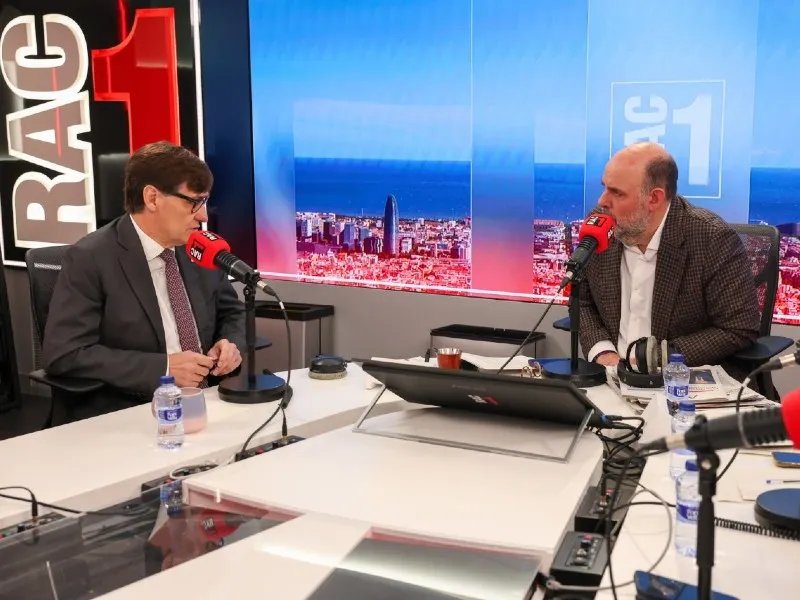
The event, moderated by Josep Pena (Diputació de Barcelona) and welcomed by CSC president Josep Mayoral, shed light on the challenges and approaches in public health concerning alcohol consumption in leisure settings.
Noemí Cortés, from the Diputació de Barcelona, presented the Festes Segures i Saludables (Safe and Healthy Festivals) Program, focused on co-creating resources for municipalities organizing popular festivals with a health perspective. Cortés emphasized: "Festivals are a space that should not be managed out of fear, but from a desire to care for people".
Meanwhile, Miguel Moya, from the Agència de Salut Pública de Catalunya, presented the Nits de Qualitat! (Quality Nights!) initiative, which promotes healthier leisure environments. Moya pointed out that "alcohol is the primary drug for treatment initiation, followed by cocaine, cannabis, and heroin. Furthermore, it is the fourth substance in individual harm (behind heroin, crack, and methamphetamine) and the first in harm to third parties".
The experience of the municipality of Cardedeu was presented by Gemma Vila, who detailed measures such as offering non-alcoholic cocktails and free water during the Festa Major, in collaboration with organizing entities. Vila highlighted that "working with entities is an opportunity to promote health and an asset that contributes to generating a culture of prevention".
Finally, Blanca Vera, from the Town Hall of Palau-solità i Plegamans, shared the implementation of the Local Drug Plan, a transversal tool that coordinates various municipal services. Vera stressed the importance of coordination: "Coordination allows us to reach spaces and situations that a single service would hardly reach, and continuous presence creates relationship opportunities beyond one-off activities".