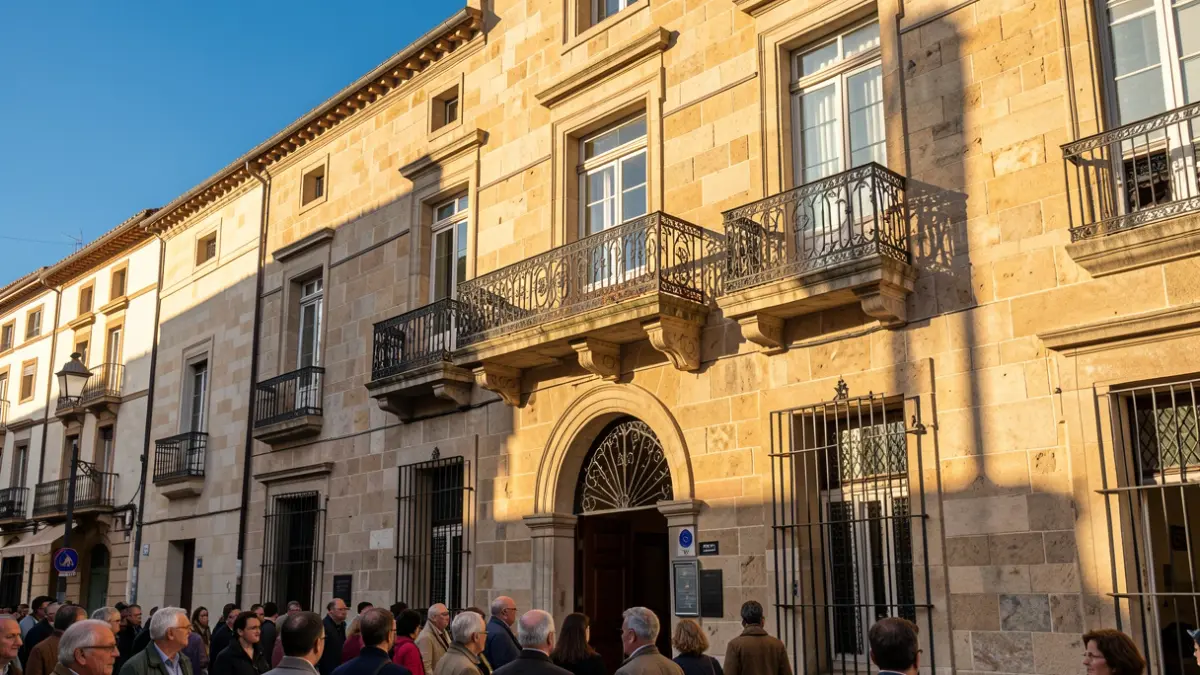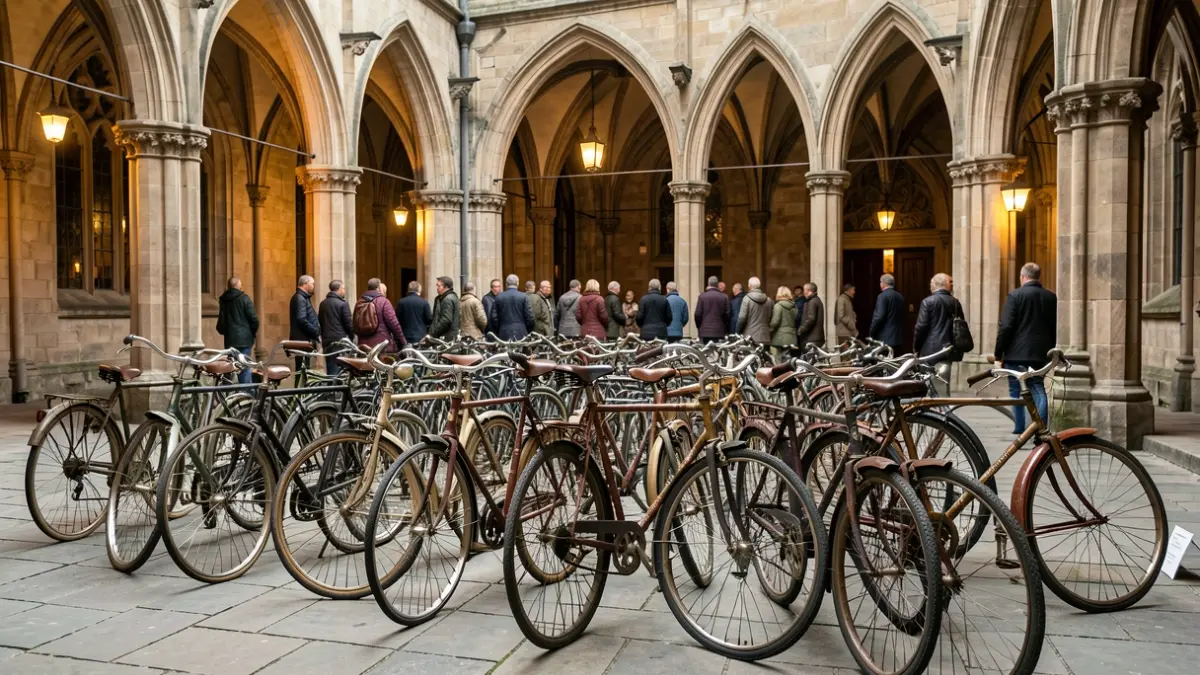
The city of Barcelona is already buzzing with the atmosphere of the Tour de France, which begins on July 4th. As a preliminary event, the City Council has presented the free exhibition ‘Bicicleta i Societat (1817-1960)’, located in the gothic courtyard of the historic building on Plaça Sant Jaume. The exhibition showcases 57 vintage bicycles, both original and replica, loaned by six Catalan collectors.
The exhibition, open until July 6th, offers a journey through the history of the bicycle from its origins in 1817 up to the 1960s. According to the council, the exhibition highlights the revolutionary impact of cycling as a response to humanity's need for mobility and as a tool for social emancipation.
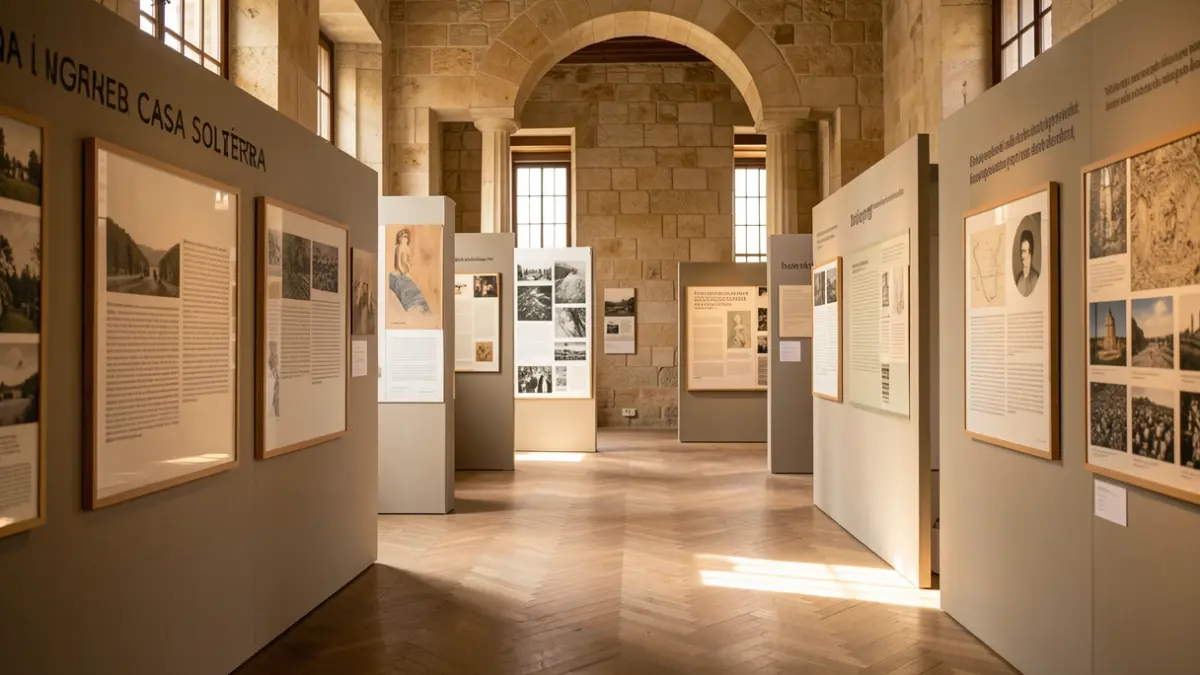
The exhibition is divided into eight conceptual areas illustrating how each era has integrated the bicycle into society, sports, and institutions. It includes a section dedicated to local manufacturers, such as Sanromà, Amat, Castells, Montpeó, or M. Santin, and a recreation of the bicycle from the 1929 Barcelona International Exposition. Visiting hours are Monday to Sunday, from 11:00 AM to 2:00 PM and 4:00 PM to 8:00 PM.
Furthermore, the exhibition covers technological innovations, the birth of cycling as a sport in Catalonia, and the bicycle's role as a symbol of freedom. It also details its adaptation to various professions, the evolution of children's tricycles, and its private, military, and police use, noting that the first cycling unit of the Barcelona Guardia Urbana was established in 1908.
Visitors can access QR codes for text translations and take photos at a 'photocall' with a tandem bicycle, similar to the one used by Mayor Jaume Collboni and Tour Director Christian Prudhomme to formalize the race's start.
“"The collection offered at the city hall is the ideal cultural preamble to welcome the 'Grand Départ' of the Tour de France. It reminds us that the bicycle is not just an elite competition instrument or a healthy leisure activity, but has historically been a true vehicle of progress, freedom, and cohesion for society."
The Councillor for Sports, David Escudé, emphasized that the exhibition serves as a perfect prelude to the 'Grand Départ', highlighting the bicycle's historical role as a vehicle for progress, freedom, and social cohesion.