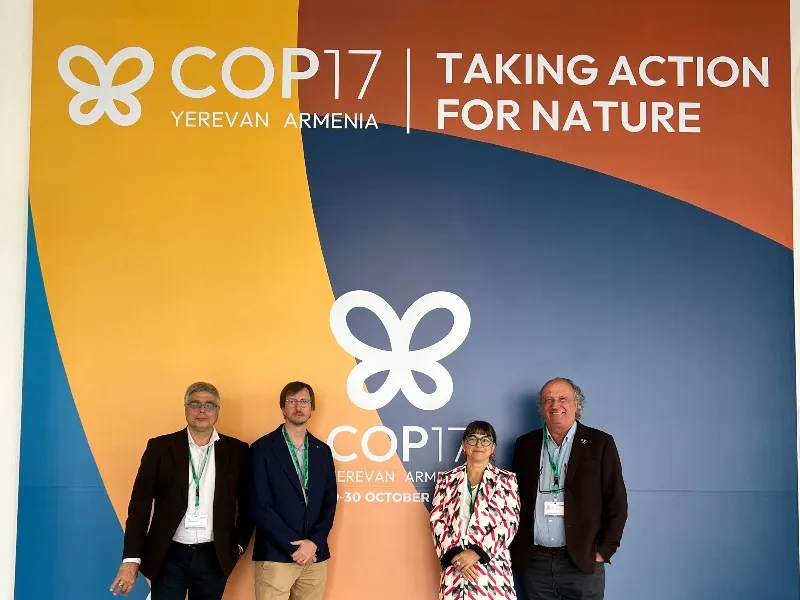
Catalonia and California share similar climate challenges, including biodiversity loss in rivers, forest drought, large fires, and marine heatwaves. A joint report, presented by the Secretary of Ecological Transition, Jordi Sargatal, at the COP17 of Biodiversity in Yerevan (Armenia), compares the two regions to find common solutions through the MCAP (Mediterranean Partnership for Climate Action).
The study, led by Catalonia and California and commissioned to CREAF, analyzes the impacts of climate change on natural systems and society, including species displacement, hydrological changes, and ecosystem growth loss. The goal is to provide effective responses to extreme climate phenomena and create replicable models.
Both regions are experiencing a progressive loss of native species, especially in freshwater systems, and an increase in extreme phenomena. Priority solutions include creating refuges for species during extreme episodes, restoring diverse landscapes, and reducing pressures such as aquifer overexploitation or overfishing.
Regarding aquatic systems, the report highlights the urgency of protecting and monitoring freshwater ecosystems, as they are key in a drier climate. The creation of aquatic refuges, such as ponds and springs fed by groundwater, is a crucial action to ensure the survival of riverine species. Alicia Pérez Porro, the report's coordinator, emphasizes the need for these refuges for river recolonization after droughts.
In the forestry sector, both Catalonia and California face problems stemming from dense and vulnerable forests. In Catalonia, rural abandonment has led to young forests with high water demand, while in California, fire suppression has created dense forests susceptible to pests and fires. The report proposes a more nature-based forest management, including deadwood, diverse-aged trees, and micro-refuges, as well as landscape-scale management.
Both regions fall into the 'fire extinction trap,' where prioritizing short-term extinction increases long-term risk due to biomass accumulation. Solutions involve forest management, extensive livestock farming, and pastoralism, combined with prescribed burns to create heterogeneous landscapes.
Marine heatwaves have a severe impact on the Mediterranean, causing mass mortality of species and a decline in key habitats like Posidonia oceanica. In California, the Pacific Ocean has also experienced drastic changes. The proposed solution is to design marine protected areas based on climate resilience, protecting food webs, marine thermal refuges, and reducing pressures such as overfishing and pollution.
The Mediterranean Partnership for Climate Action (MCAP) is an alliance of Mediterranean climate regions promoting collaboration for climate adaptation and resilience. The organization, launched in 2023, includes regions worldwide working to find solutions against droughts, fires, and rising temperatures.