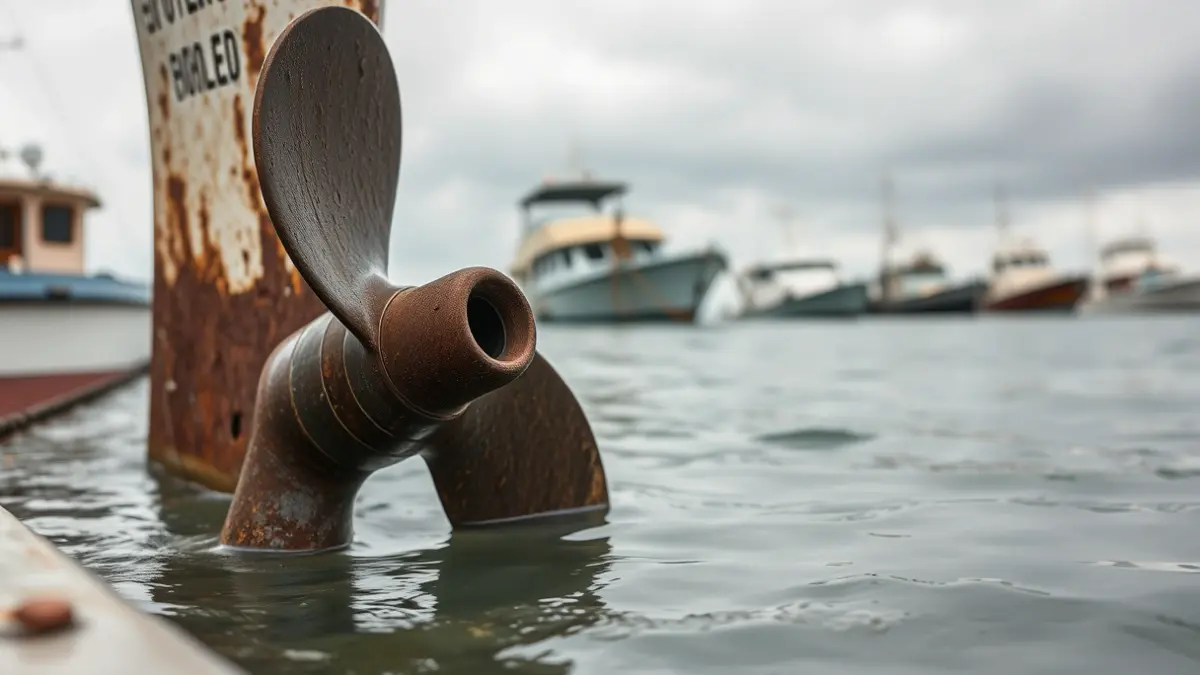
Maintaining a vessel involves a constant investment in mooring fees, storage, and periodic maintenance. When a boat's market value deteriorates and selling becomes unfeasible, the only legal option is scrapping. However, this path is fraught with significant economic and bureaucratic obstacles.
Scrapping a small vessel, about seven meters long, can cost around 1,800 euros, according to estimates from a specialized company that handles about a hundred scrap operations annually. This figure increases considerably if the boat needs to be transported more than 50 kilometers. The main problem, however, lies in the administrative management with the Capitanía Marítima (Maritime Captaincy), an agency under the Ministry of Transport and Sustainable Mobility. Authorization for deregistration can take anywhere from weeks to a full year.
“"We have an immense queue of boats waiting to complete authorization."
During this waiting period, the owner must continue paying for mooring or storage, an unsustainable expense for someone who has already decided to dispose of the boat due to lack of resources. This situation leads many owners to scrap the vessel before obtaining authorization, a practice rejected by the administration. The situation has worsened in the last six months with a new requirement: once authorization is obtained, the scrapping must be communicated 15 days in advance in case the Maritime Inspection decides to attend.
The nautical sector demands that the procedure be equated to car scrapping, where an authorized manager can process deregistration electronically in a few minutes. Professionals point out that current regulations, dating back to 1966, are obsolete and urgently need updating. Once scrapping is achieved, the environmental protocol is strict: pollutants are extracted, and waste is transferred to an authorized plant.
Given these difficulties, many owners choose to abandon their vessels. Ports must then manage these abandonment files, a process that can last between two and six years and is blocked if the boat has judicial liens. The law requires the port to prove six months of non-payment and inactivity before initiating the process, by which time the accumulated debt is already considerable.
“"There is a risk that, during the procedure, the boat may have already sunk at its own mooring."
A possible solution proposed is the use of notarial retention rights, regulated by the Civil Code of Catalonia. This formula would allow the port to dispose of the vessel for sale or scrapping in just two or three months, after notifying the owner. Catalan sports ports hope that the Capitanía Marítima will officially validate this procedure to expedite the release of moorings. Catalan legislation, more advanced than the state's in this regard, foresees a new regulation that will offer a more complete and operational regulatory framework.