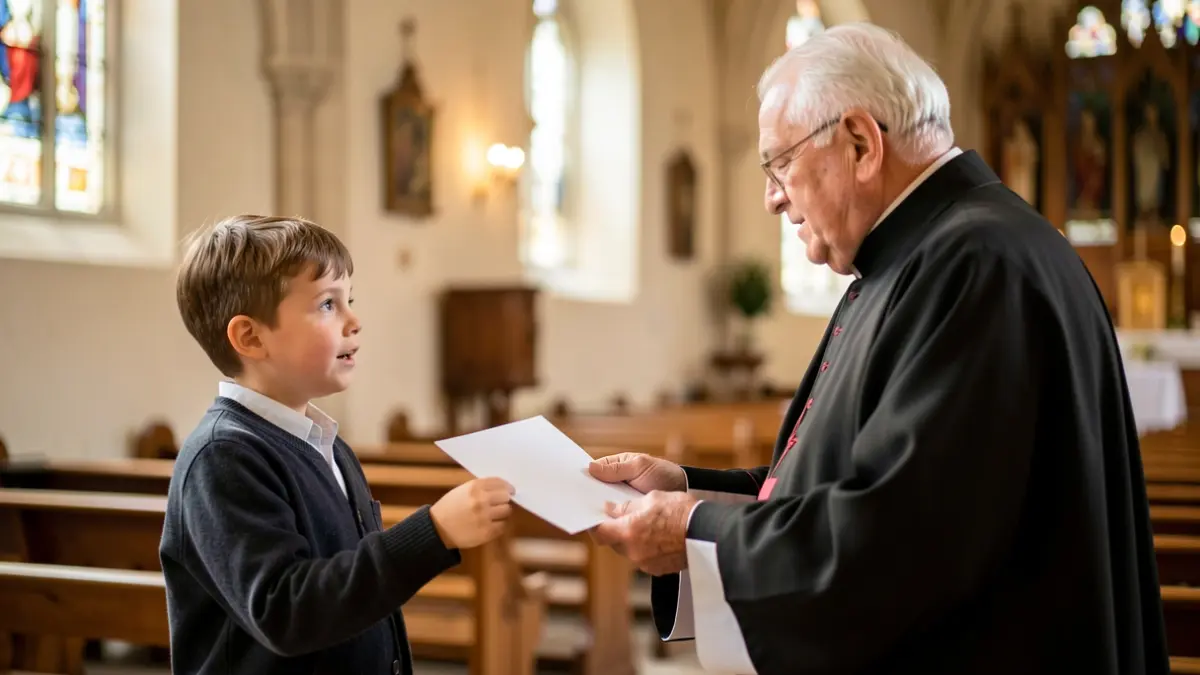
On the second day of his visit to Catalonia, Pope Leo XIV revealed a more relaxed and approachable side during his stay at the Sant Agustí parish in Barcelona. There, he met Renzo, a six-year-old boy who had sent him a letter explaining the daily struggles faced by many families in the city. The pontiff personally read the letter, which was filled with questions about the Pope's preferences and the injustices the child observes in his surroundings.
Renzo asked the Holy Father if he liked football. The Pope confessed that while he now plays tennis, he played American football in his youth and also played as a defender in football matches with seminarians in Peru. "Football helps us understand that life is not a solitary race. It's played as a team, and we must learn to run together," the pontiff reflected.
Amidst laughter, Leo XIV admitted he never aspired to be Pope as a child but felt God's calling from a young age to dedicate his life to religious service. He also had to answer more complex questions posed by Renzo, such as his parents' worries, the situation of homeless people in the city, and the disparity between the rich and the poor.
Does God want there to be poor and rich people?
During the visit, the Pope also listened to testimonies from representatives of organizations working with vulnerable groups in the Raval neighborhood, including Cristina García from Càritas Barcelona, Xavier Agramunt from Obinso, and Encarna Jordan from Associació SICAR. They shared the hardships and helplessness they often experience in their work.
In response to these concerns, Pope Leo XIV called for accompanying and supporting "those who need it most," lamenting the loss of the "sense of the sacred dignity of the human being." In a speech delivered entirely in Catalan, he emphasized the importance of maintaining hope in people's capacity to "regain their course" and in the "transformative power" of "God's love."
Finally, the pontiff championed the role of grandparents, urging against normalizing the loneliness of the elderly and calling for action: "Even if they are not our grandparents, let us not allow them to feel alone or unprotected."