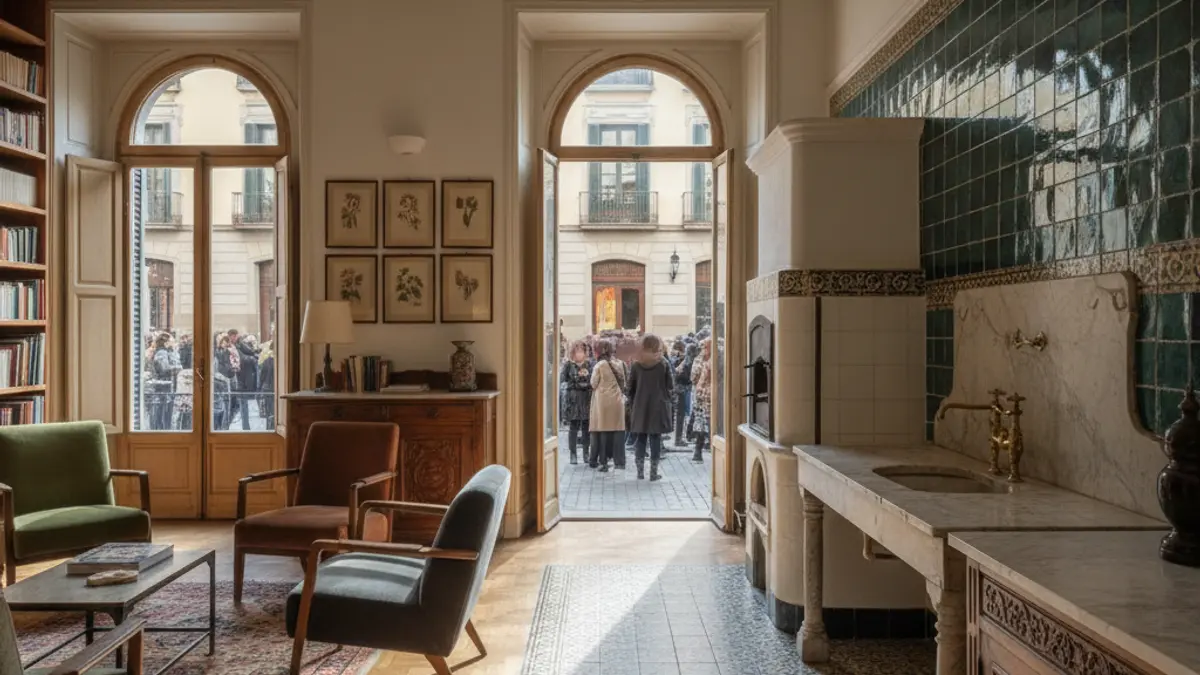
This space, which has undergone a comprehensive restoration, combines original elements with eclectic contemporary design proposals. The rooms, including all domestic dependencies, can be booked by the hour starting from 200 euros, and gastronomic experiences will also be offered.
The recovery has allowed for the preservation of details such as a kitchen wall in its original state and highlights the luminosity of the corridors. The current decoration integrates pieces designed to dialogue with Gaudí's architecture, antique elements, and furniture that the architect had created for other projects. This floor was part of the eight apartments that Gaudí restored for rent, primarily focusing on the architectural aspects and finishes.
The architect who led the works, Xavier Villanueva, emphasized the recovery of nearly a hundred carpentry elements and other materials, as well as the high quality of the stuccoes. The restoration was made possible through the collaboration of artisans from various trades, who helped recover many original elements, including replicas and the original carpentry of the tribune's stained-glass windows, which Antoni Gaudí repurposed from a pre-existing building. Other components, such as the pavements, had to be completely redone due to their poor condition.
During the process of recovering the lime stuccoes, floral decorations were discovered that had remained hidden under several layers of paint. Another significant find was a doorknob designed by Antoni Gaudí, previously known only in the architect's later works.
Designer Paola Navone and OTTO Studio were responsible for the interior design, which, with contemporary elements, establishes a dialogue with the century-old style of the original house, offering a reinterpretation of Gaudí's rooms from a 21st-century perspective.