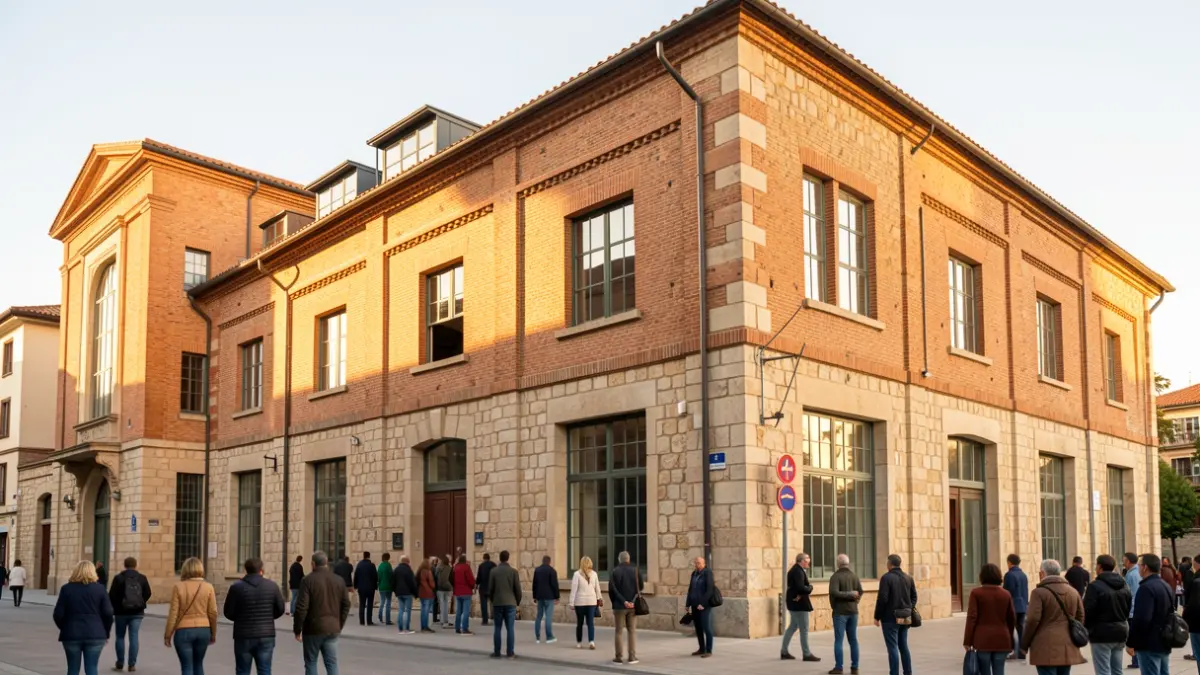
With over thirty years of history, the Sant Andreu – Mestre Pich Santasusana Municipal Music School, currently located in the Fabra i Coats complex, has been honored with the prestigious 2026 Catalunya Construcció award in the best functional rehabilitation category. This accolade highlights the complex task of transforming the former factory into a modern and functional educational space, preserving its characteristic features while meeting the acoustic and safety needs of nearly 700 students.
The rehabilitation project, conceived in 2021, presented a considerable technical challenge. Award-winning technical architect Albert Lacasa notes that the key was working with construction packages to address all requirements, including soundproofing and acoustic attenuation using materials such as rock wool, wood panels, and double-layered glazing. Núria Jené, coordinator of the city's Municipal Music Schools, emphasizes the constant collaboration and active listening between the technical team and the educational center.
In parallel with this recognition, the school is premiering the original musical Filatures Fabra i Coats. This unique production, set to debut on June 1st, serves as a tribute to the industrial past of the Sant Andreu district and the history of the factory that now houses the school. According to Edurne Vila, director of EMM Sant Andreu, the musical aims to evoke the former sounds of the factory and contrast them with its present-day acoustics, through performances by the school's students.