Despite a year marked by abundant rainfall, the need to ensure long-term water supply remains a priority. The recent water emergency situation has highlighted the importance of developing infrastructure to increase resilience against future droughts. In this regard, a successful system used in the Llobregat river is to be replicated in the Besòs river: water regeneration.
This method, which involves treating water after it leaves the treatment plants before returning it to the river course, was key to ensuring 25% of the supply to the metropolitan area of Barcelona during the last drought, partially decoupling it from aquifers and reservoirs. The replication of this system in the Besòs aims to reduce the metropolitan consumption's dependence on rainfall.
According to Aigües de Barcelona sources, the implementation of this system in the Llobregat and Besòs river basins, which will function as a closed circuit, along with the production from the desalination plant in El Prat de Llobregat, will guarantee 70% of water considered "non-conventional".
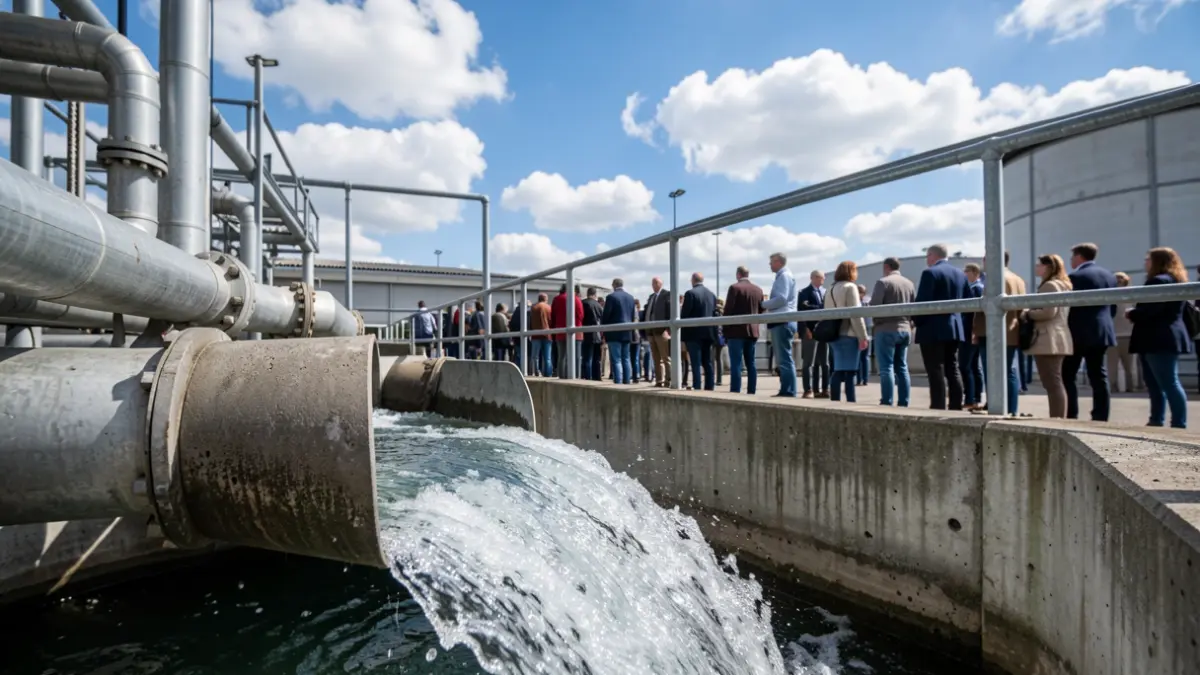
The regeneration process involves several stages: the EDAR (Wastewater Treatment Plant) purifies sewage water; the ERA (Water Regeneration Plant) treats it for industrial or agricultural uses; and finally, the ETAP (Drinking Water Treatment Plant) makes it potable for the supply network.
In the Llobregat, water purified at the EDAR Baix Llobregat is regenerated at the ERA Baix Llobregat and reintroduced into the river at Molins de Rei. After flowing through the river course, it is captured at the ETAP of Sant Joan Despí for potabilization. This circuit allowed for an input of nearly 1,500 liters per second to the metropolitan supply during the most critical moments of the drought.
In the Besòs, the future water regeneration plant will be located at the EDAR Besòs complex, in El Fòrum. The project, accelerated following the 2023 drought, aims to be completed within a maximum of ten years. Additionally, a pipeline will be built to pump the regenerated water upstream, thus closing the metropolitan hydrological circuit.