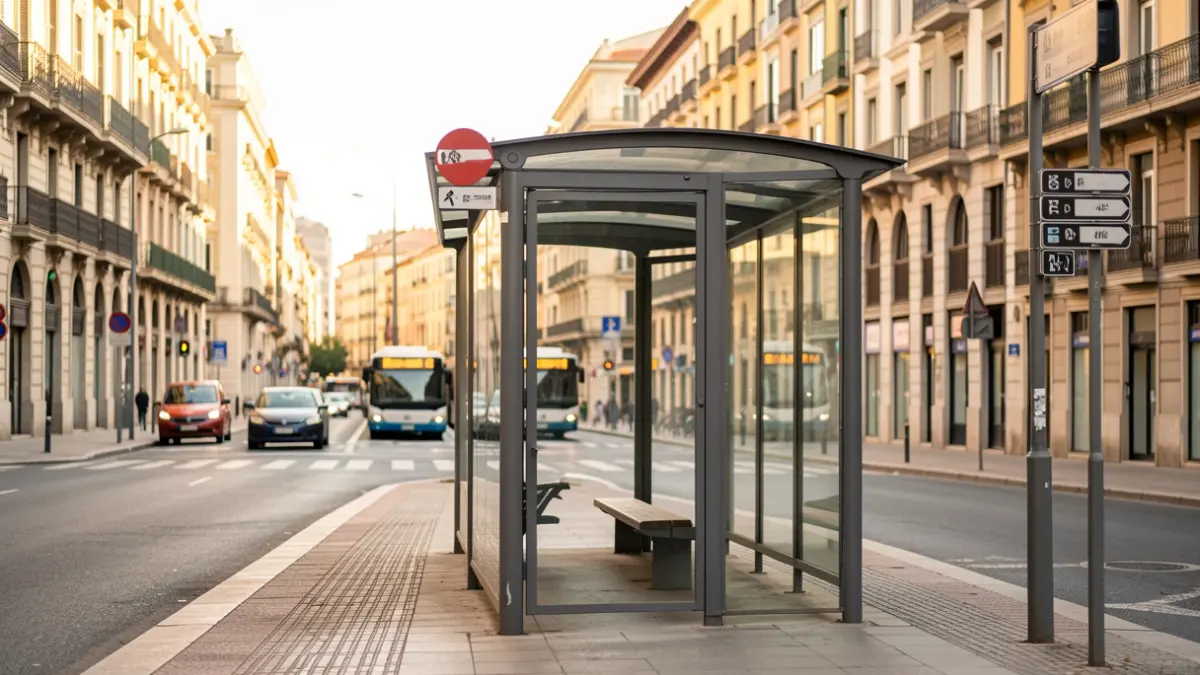
Interurban bus stops on Diagonal Avenue in Barcelona, particularly in the Maria Cristina, Palau Reial, and Zona Universitària areas, will undergo reorganization starting Monday to address the crowding and long queues affecting users. This joint initiative by the City Council and the Generalitat de Catalunya aims to improve mobility on a stretch used by 1,800 buses daily and 30,000 passengers.
The number of stops will increase from the current 13 to 23, with the aim that no single stop will serve more than 20 lines. This is expected to significantly improve bus docking and undocking times, as well as journey durations, avoiding current situations where some stops concentrate around forty buses. First Deputy Mayor Laia Bonet highlighted the need to upgrade infrastructure that does not match the growing demand for interurban transport, especially since the Rodalies (commuter rail) crisis.
The Director General of Mobility and Transport for the Generalitat, Susi López, explained that this is a low-cost operation requiring minor interventions such as signage changes and the installation of more shelters. The goal is to group operators and corridors for easier understanding. Bonet assured that users will only need to walk a few meters and that no significant changes to their habits will be required.
These improvements are part of a broader plan that will include other city locations during 2027 and 2028, such as stops on Meridiana with Felip II or around Plaça d’Espanya. Subsequently, the Sants and Fabra i Puig bus stations will be updated. In parallel, the council and the Generalitat are working to identify high-capacity bus corridors needed for Barcelona.