For decades, the administrative border between Sant Adrià de Besòs and Badalona (Barcelonès Nord) has been a reality for administrations, but not for the thousands of residents who daily cross this division for their everyday activities. The new joint candidacy, under the slogan "Recosint fronteres: Teixint comunitat" (Resewing borders: Weaving community), aims to change this dynamic.
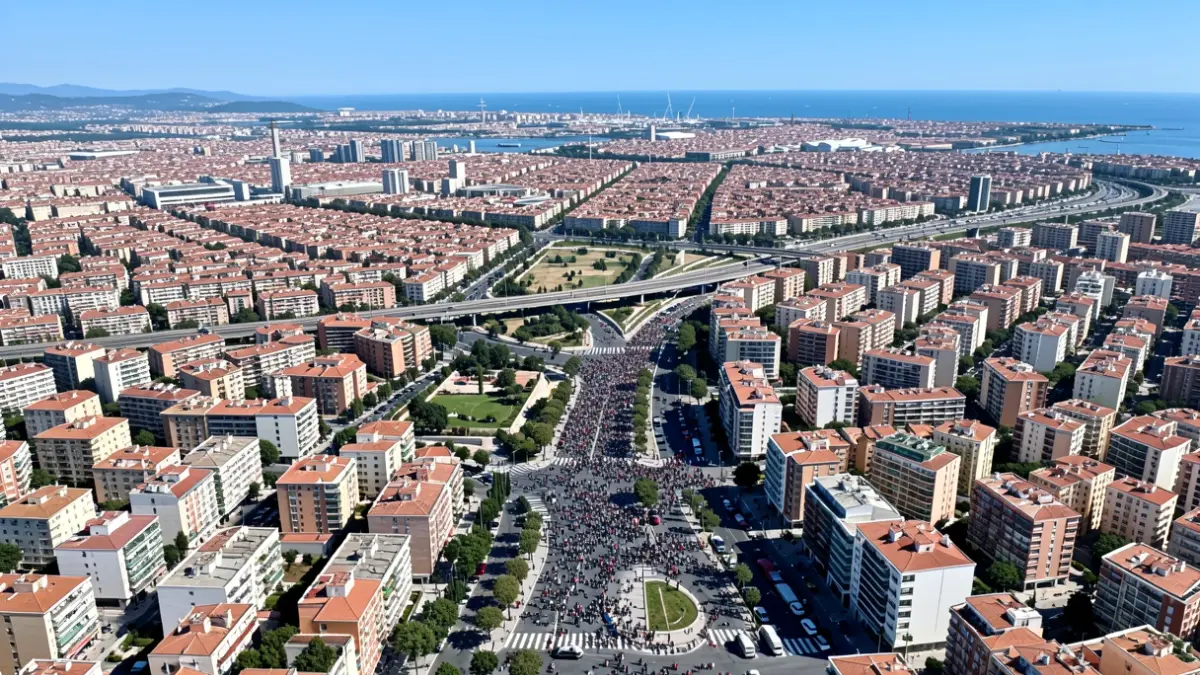
With this proposal, both city councils aspire to receive 25 million euros to execute over the next five years a comprehensive program of urban, environmental, and social regeneration. The intervention area covers 101 continuous hectares, home to over 33,000 people, addressing problems that transcend municipal boundaries.
This initiative marks the first time two municipalities have presented a unified candidacy for the Generalitat's new Neighborhood Plan. According to José A. Gras, Councilor for Territory in Sant Adrià, the spirit of the proposal lies in the "urban continuity" and the fact that "people live on both sides of the border," sharing problems and therefore needing joint solutions.
His counterpart in Badalona, Daniel Gracia, considers the project an "exercise in institutional maturity," highlighting the ability of administrations to collaborate for the benefit of citizens who constantly move between the two municipalities.
The action area includes neighborhoods such as Sant Adrià Nord and Sant Joan Baptista in Sant Adrià, and Artigues, el Remei, Sant Roc, Sant Antoni de Llefià, and Sant Mori de Llefià in Badalona. These areas exhibit socioeconomic vulnerability indicators above the Catalan average.
The program includes 27 actions divided into physical transformation, ecological transition, and socio-community action, with an equitable investment. Actions range from housing rehabilitation and the creation of climate refuges to employment programs and public space improvements.
Among the highlighted projects in Sant Adrià are the conversion of the former Telefónica building into a facility for the elderly, the renovation of the Ricart sports center, and the development of Can Rigalt as an innovation center. Badalona will transform the old Firefighters' barracks in Sant Roc into a Metropolitan Center for Arts and Crafts to improve vocational training and job placement.
The project's management will fall to a joint office attached to the Consorci del Besòs, seeking to consolidate a new form of territorial intervention. Daniel Gracia notes that this candidacy is part of a necessary change of scale for the Besòs territory, which he believes has a historical "debt" of investments pending.
José A. Gras concludes that, although residents experience the territory as a single space, interventions had been planned as if they were two distinct cities. This Neighborhood Plan will allow for the joint planning of this shared area to begin.