Every quarter, the same thing happens in thousands of offices. Invoices arrive in PDF, photos taken with a mobile phone, and emails with attachments. Someone has to open them one by one and copy the NIF, date, taxable base, and VAT into the accounting software.
It's a necessary task, but slow, repetitive, and prone to errors. And it takes time away from work that truly adds value: advising the client.
Around 54,000 companies are dedicated to accounting and tax advisory in Spain. Most have fewer than ten employees.
More than half of these firms say they struggle to find qualified staff. Contabilify was created to address this problem: ensuring the mechanical part of the work doesn't depend on having more staff.
From PDF to ledger entry, without typing
Imagine an accounting firm in early April, with the quarter-end closing looming and a client who suddenly sends a folder with seventy invoices. Until now, someone had to open them one by one. With Contabilify, the firm uploads them all at once, or they are picked up directly from the client's Google Drive folder, and within minutes they are read.
The difference is that the platform doesn't just copy the total amount. It reads the invoice as an accountant would: it separates bases when there are different VAT rates, identifies the flat-rate surcharge and income tax withholdings, and suggests the General Accounting Plan account corresponding to each expense.
And it learns. If the accountant decides that invoices from a particular supplier should go to a different account, they will be classified that way next time. Cases that are not current expenses, such as reimbursements, purchases to be treated as fixed assets, or transactions with foreign suppliers, are flagged for the professional to decide how to handle them.
“"We don't compete with A3 or Sage. We export to them. The firm doesn't have to change its software: it just stops typing."
At the end of the process, the ledger entries are exported to the software the firm already uses, whether it's A3, Sage, Contasol, or Holded. Before exporting, the platform checks that each entry balances. If an NIF is missing or a figure doesn't add up, the invoice is not processed: it goes into a review queue, because the final decision always rests with the accountant.
Designed for ease of use
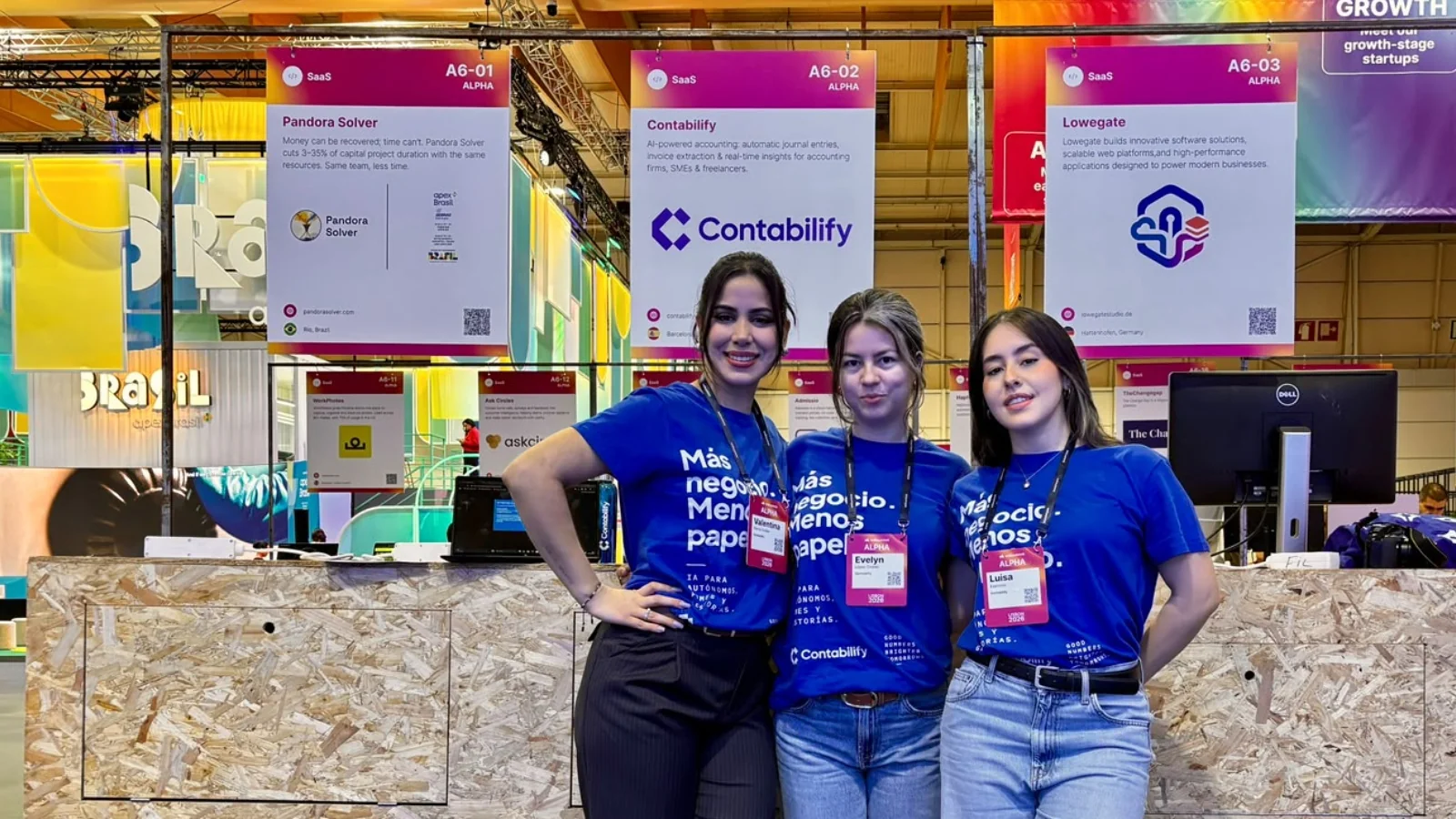
Carla Molina Angel is a data scientist with a master's degree in user experience (UX/UI). She has designed and built the tool with the end-user in mind. Alongside her, Evelyn López Giraldo, CGO and COO, manages the company's growth and operations.
“"Technology should save work, not add to it. If an accounting firm needs a course to get started, we've failed."
A sector preparing for change
The introduction of mandatory electronic invoicing between companies, scheduled for large corporations from October 2027 and for the rest from October 2028, will accelerate the digitalisation of accounting firms.
«Accounting firms that automate the mechanical part now will be better positioned for this change, with more room to grow without having to hire», notes the founder.
The first accounting firms are already working with Contabilify. After its participation in the Web Summit in Lisbon, the company has a clear goal: that no firm should ever have to manually enter invoices again.
Less time typing, more time advising.