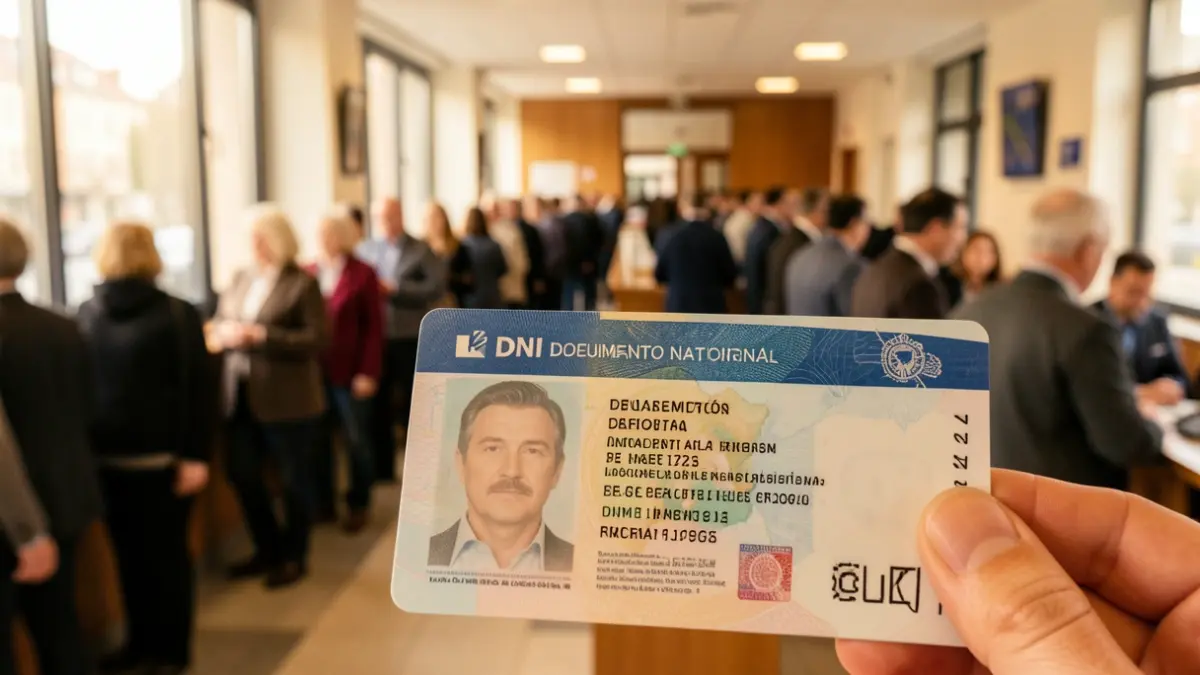
Renewing the Spanish National Identity Document (DNI) in the Girona region has become a lengthy process, with waits reaching almost two months, even when searching for appointments across all provincial offices. A check on August 4th on the National Police's official appointment portal showed the first available slot was September 25th in Puigcerdà, while in Girona city, no appointments were available until October 6th.
This situation contrasts with other provinces like Tarragona or Lleida, where appointments were more readily available. Facing these delays, particularly acute during the summer season, the Government Sub-delegation in Girona has announced the launch of a "shock plan" to increase service capacity through overtime for National Police officers.
This plan, effective for the coming months, includes overtime for issuing ID cards and passports. In Girona, 360 hours were authorized in July, 432 in September, with requests for 257 in October, 372 in November, and 288 in December pending approval. In Lloret de Mar, the reinforcement is concentrated in September with 112 hours, and requests for 88 hours for October, 88 for November, and 96 for December have been made. Extensions are also planned for Sant Feliu de Guíxols in the last quarter.
The Sub-delegation attributes part of the pressure to the seasonal increase in demand, with many people renewing their documents before going on holiday. Additionally, there's an increase in immigration-related procedures, including the resolution of residency applications and the processing of Foreigner Identity Cards (TIE). Reinforcements were in place for these procedures during August.
As an alternative, the National Police uses mobile units like the Vidoc van to bring document issuance closer to municipalities without permanent offices. However, the presence of these units depends on specific schedules. The inquiry also reveals that the wait time for renewing a passport is significantly shorter than for an ID card.
Some citizens opt to go directly to police stations without an appointment, as explained by Ezequiel Sánchez, who managed to renew his ID card without a prior booking. Nevertheless, this experience does not guarantee service for all cases.