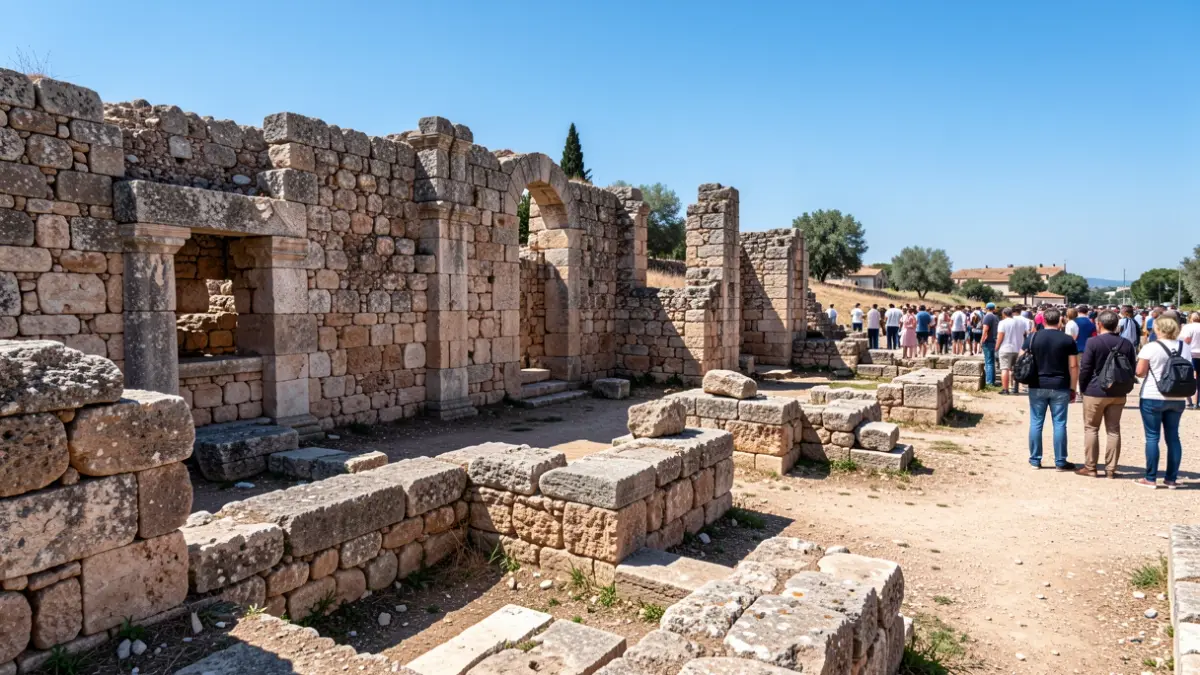
The work, focused on the surroundings of the Santa Maria monastery, has uncovered the dimensions of a large funerary complex dating from the 4th to the 6th centuries. According to experts, this space could cover nearly 500 square meters, with a structure comparable to basilicas found in other significant sites such as Empúries or Tarragona.
The current campaign has recovered three monolithic stone sarcophagi, originating from the Narbonensis region of Gaul. This discovery reinforces the hypothesis regarding the commercial importance Roses held at that time. Furthermore, archaeological levels have been located that suggest a more stable occupation than previously thought during the period between the 7th and 10th centuries.
“"There is still a lot of work to determine it, but it would be a significant piece of data for the town's history."
Alongside the research, the Càtedra Roses d’Arqueologia i Patrimoni Arqueològic, with the support of the local council, has presented a new visitor guide for the site. This resource includes digital support via QR codes and is designed to help visitors understand the different historical phases of the complex.