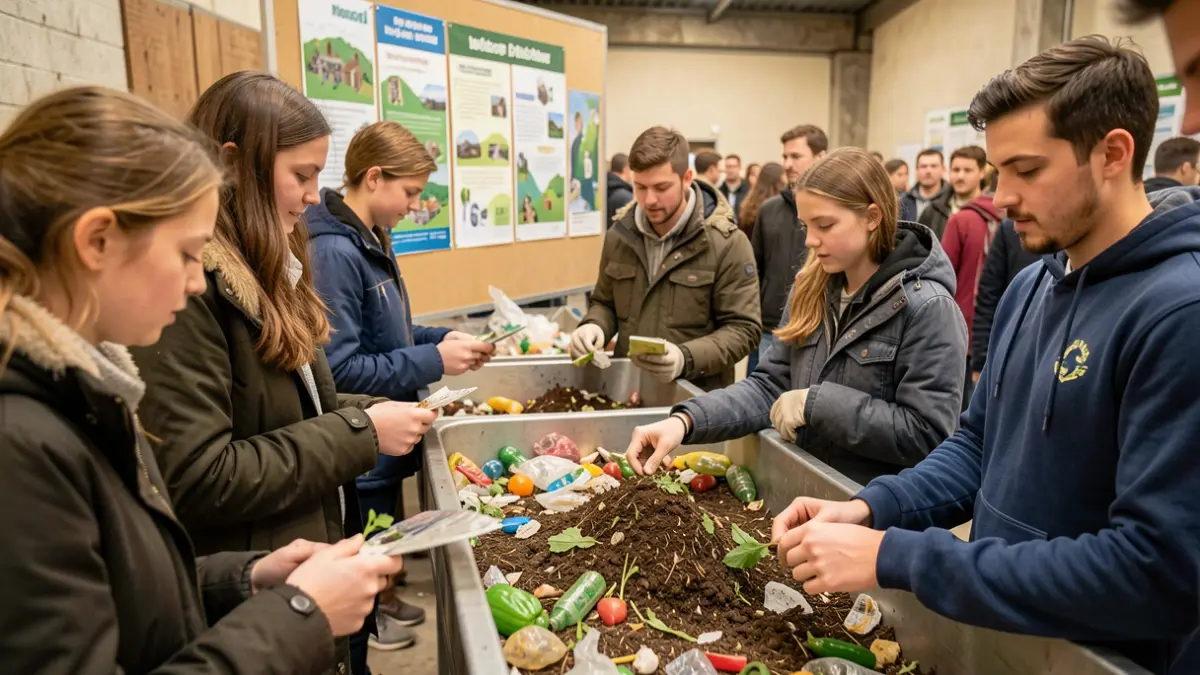
The Waste Treatment Center (CTR) in Mas de Barberans is preparing to host nearly 300 students from the upper cycle of primary education during May. These students come from various educational centers in the Baix Ebre and Montsià regions. The initiative, promoted by the Consorci de Polítiques Ambientals de les Terres de l’Ebre (COPATE), aims to introduce young people to the functioning of waste management and reinforce their environmental awareness through practical experiences.
During the visit, schoolchildren will have the opportunity to learn firsthand about the process that organic matter undergoes once deposited in the brown bins. At the composting plant, technicians and environmental educators will explain how these waste materials are transformed into compost, an ecological fertilizer for agricultural and gardening uses. The activity also emphasizes the importance of correctly separating organic waste at home to promote recycling and minimize environmental impact.
The tour will continue to the area designated for residual waste, where students can observe the treatment of waste thrown into the grey bin. In this space, they will be shown how the controlled landfill operates and the various measures implemented to minimize environmental effects, such as waste compaction or daily covering to reduce odors.
Additionally, during the visit, the degassing and sealing works carried out in the different phases of the landfill will be explained. This way, students will be able to understand the complexity of waste management and the importance of reducing the amount of waste that ends up in the residual fraction to the maximum extent possible.