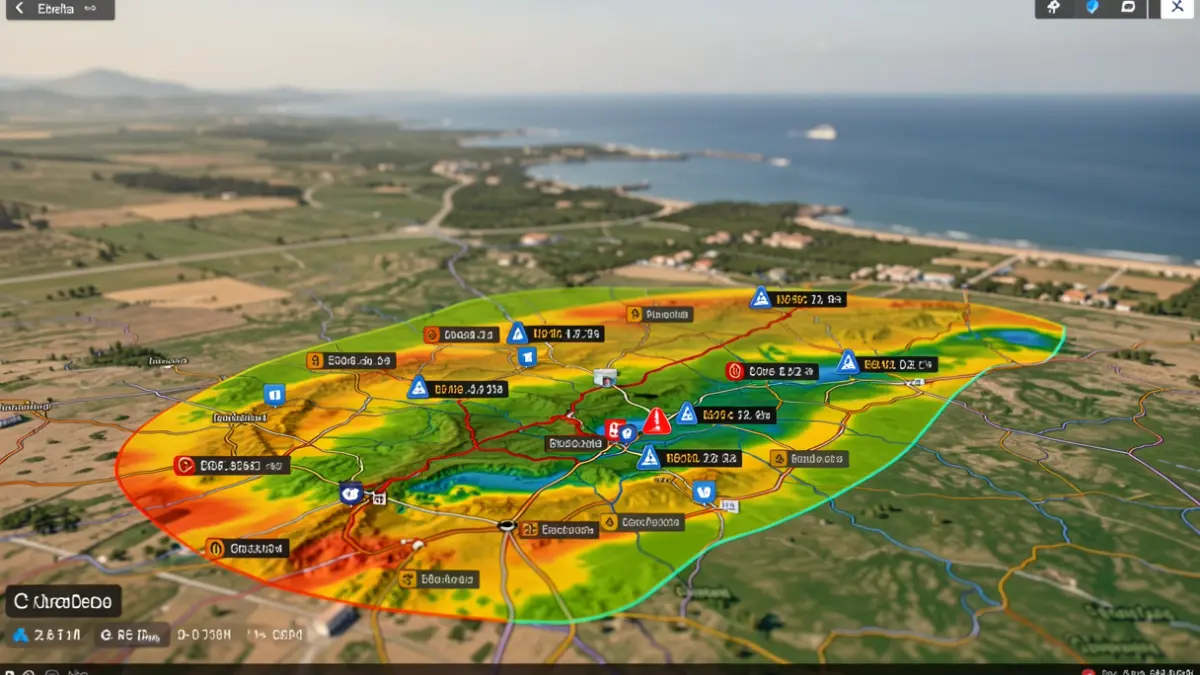
The municipalities of La Ràpita, Deltebre, and L'Aldea will be the first in Terres de l'Ebre to integrate the Argos City system, a new emergency management tool contracted through the Mancomunitat DeltaGestió. This initiative aims to enhance anticipation capabilities and response speed for risk situations, particularly in light of recent flooding episodes in the Ebre Delta.
The system integrates real-time meteorological information from various sources and cross-references it with territorial vulnerability data. This allows a shift from generic alerts to operational information about potential impacts, locations, affected populations, and necessary actions. "In an emergency, having adequate information as early as possible is crucial. It allows us to be better prepared, coordinate actions more effectively, and strengthen the response of municipal services," stated the mayor of L'Aldea, Xavier Royo.
The new tool will be tailored to each municipality's reality to identify vulnerable points, establish alert thresholds, and link risk situations with corresponding action protocols. For instance, during intense rainfall, the system can determine if an area prone to flooding, a communication route, or critical equipment will be affected. The acting mayoress of La Ràpita, Helena Queralt, emphasized that "the goal is not to generate more alarms, but to have better information to make better decisions and better protect citizens" in the face of increasingly demanding weather phenomena.
The system will also enable the verification of actions taken for each situation, facilitating learning and protocol improvement. The mayor of Deltebre, Lluís Soler, explained that "in an emergency, every minute counts, but it's also important to learn from each episode." The combination of forecasting, territorial observation, and accumulated experience will lead to improved coordination and decision-making.
The initial implementation will focus on flood risk, but the system is designed to be comprehensive, incorporating risks associated with wind, forest fires, heatwaves, cold snaps, air pollution, and electrical activity. The technical phase to configure and adapt the Argos system, developed by HYDS (a spin-off from the Universitat Politècnica de Catalunya), will take place over the coming months. It is expected to be fully operational next season and potentially extended to other municipalities.