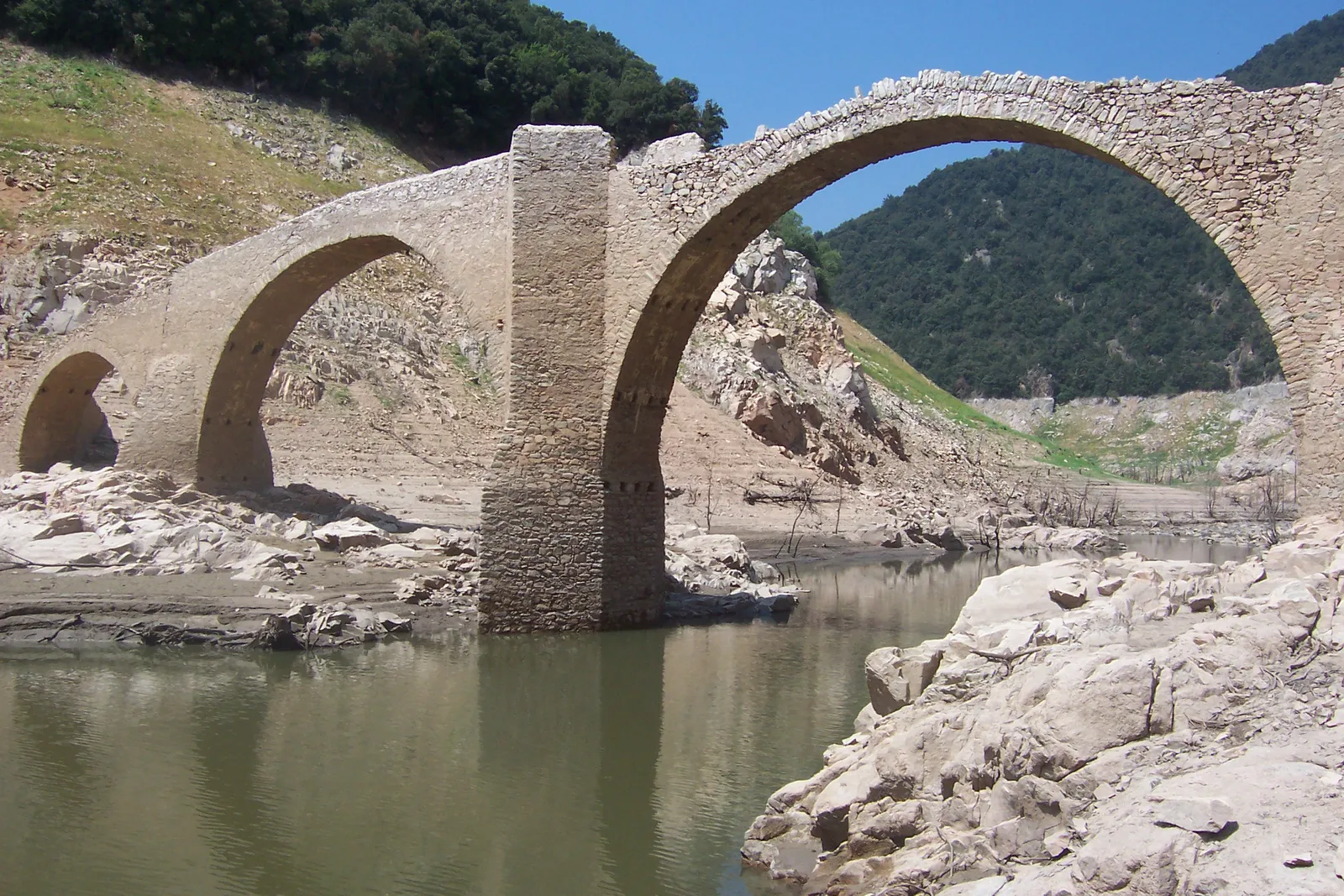
The review, carried out by Atri Cultura i Patrimoni, has increased the number of registered elements from 545 twenty years ago to the current 590. An additional 26 records have been maintained, bringing the total to 616, for elements that have disappeared or were removed due to revised criteria. The inventory includes physical vestiges related to the rivers or their water use, such as bridges, canals, weirs, industrial colonies, and washhouses.
The task involved evaluating old data, collecting new information from various sources, and visiting each element to assess its condition and conduct a photographic report. All information has been centralized in a database. The 2006 inventory can be consulted on the websites of the Consorci del Ter and Ruta del Ter, and will be updated online soon. The records will also be provided to the member municipalities.
Seventy-one new elements have been added, including recent constructions, previously unknown or undocumented elements, or those excluded by error. Among the new additions are bridges and footbridges such as the new bridge of Rocasses in Camprodon, the Aurora bridge in Girona, and the footbridge on the Camí de la Puda in Sant Joan de les Abadesses.
The report concludes that the threat posed by the 2006 crisis, which led to the closure of many riverside factories, is being overcome. Many of these have been converted into new industrial establishments or public facilities. Those still awaiting rehabilitation show the effects of neglect. Private heritage, such as housing in industrial colonies or old mills, has also been recovered in many cases, although abandoned ones continue to deteriorate. Most weirs, canals, and central mechanisms are operational and require superficial maintenance, while the old housing spaces of the power plants need rehabilitation.