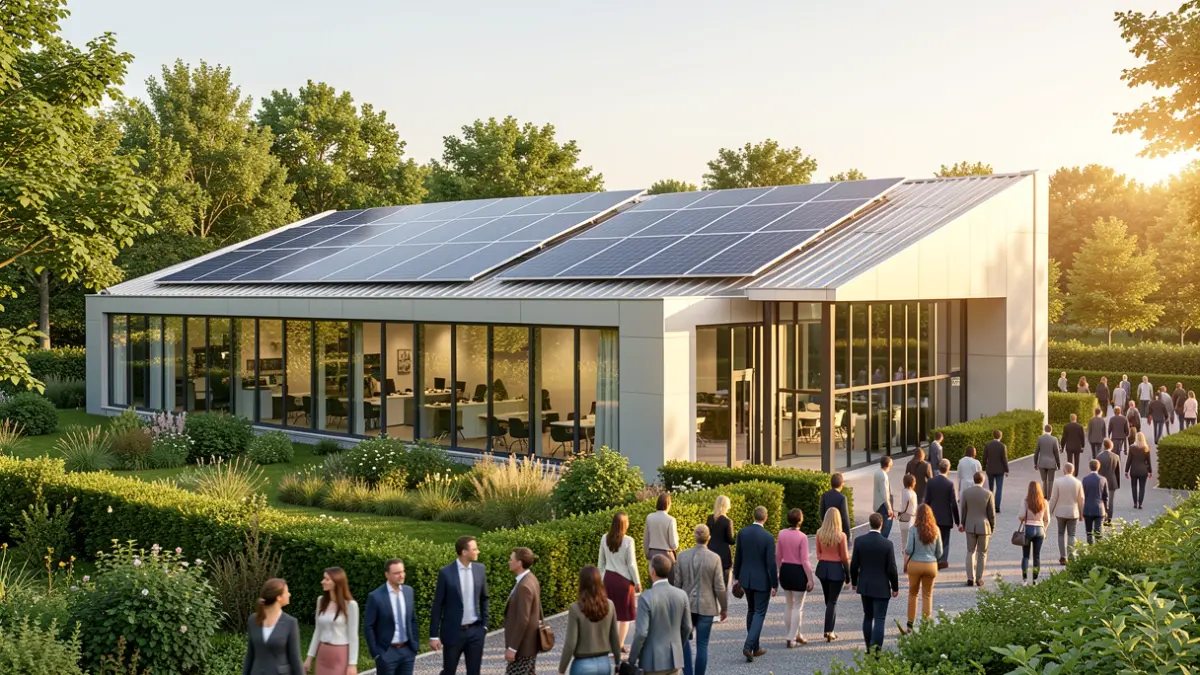
The project includes the use of renewable energies to cover electricity demand, a rationed water consumption, a closed-loop cooling system to prevent evaporation losses, and insulating solutions to mitigate noise pollution for neighboring populations. These measures aim to ensure the project's sustainability in the Ribera d’Ebre region, an area with a significant industrial history and record-breaking temperatures in Catalonia.
The Generalitat states that the gigafactory will adhere to a European code of conduct for data centers, despite the Ribera d’Ebre region being one of the hottest in the country. The government is confident that the European Commission will consider territorial acceptance and investment surrounding the project, which has 1% participation from the Generalitat, 48% from the State, and 51% from private capital.
Albert Tort, Secretary of Telecommunications and Digital Transformation of the Generalitat, highlights that sustainability is considered an "added value" to compete in the European selection process. The bid, which includes a sub-site in San Fernando de Henares (Madrid), aims to emphasize the project's impact, acknowledging its effect on a currently undeveloped industrial estate.
This initiative coincides with a time when the southern regions of Catalonia are submitting objections to the Territorial Energy Plan (Plater) due to the concentration of wind and photovoltaic farms. The area already significantly contributes to energy supply, with the nuclear power plants of Ascó and Vandellòs nearby.
The initial investment of over 700 million euros from the State is guaranteed, but attracting private companies and investors will be necessary. The European Commission's code of conduct emphasizes efficient water resource use and optimal cooling, key aspects given the high temperatures recorded in Ribera d’Ebre, such as the 44.1 degrees in Vinebre.
The maximum projected energy demand for the gigafactory will be 55 MW initially, potentially increasing to 150 MW between 2029 and 2030, a commitment the Generalitat assures will be met with renewable sources.