Construction work on the new biomass heating network in Queralbs is progressing as planned. This municipal initiative aims to decrease reliance on fossil fuels by utilizing biomass sourced from surrounding forests. The project involves building a thermal power plant and a boiler to supply heating to both public facilities and private residences.
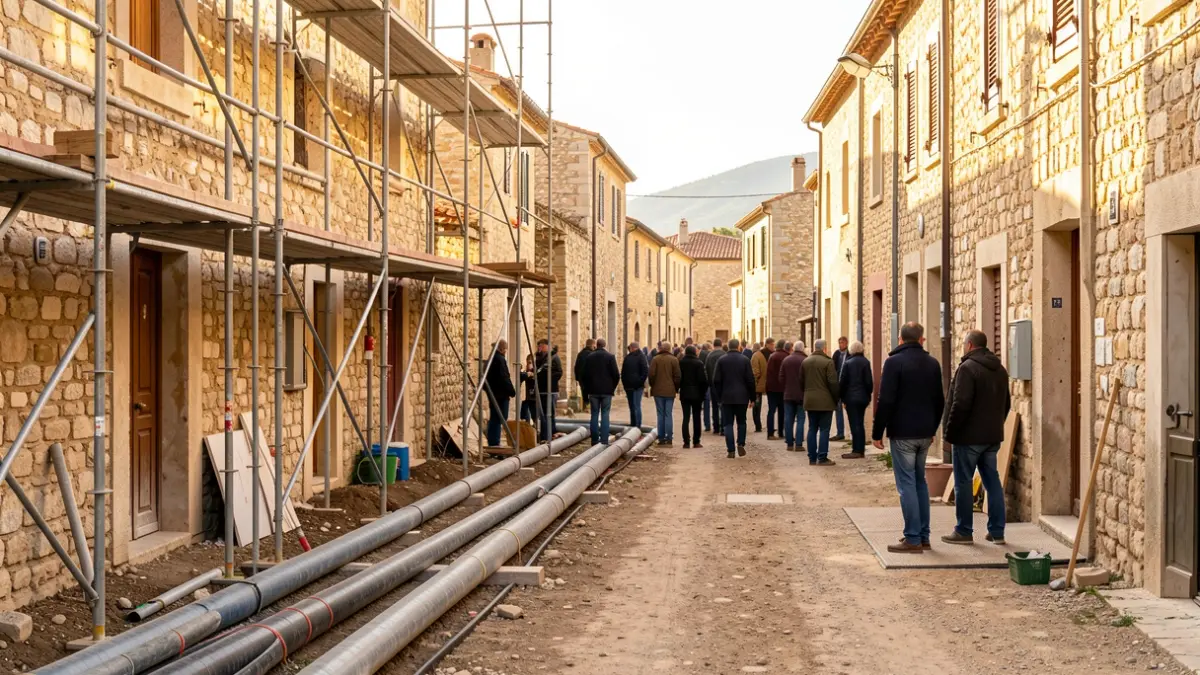
A significant portion of the piping for the future heating network has already been installed in the upper part of the town. This infrastructure will serve buildings such as the Town Hall and the Casa de Núria, as well as any private homes that choose to connect. The goal is to promote more sustainable forest management and reduce the use of non-renewable energy sources.
Concurrently, a comprehensive renovation of Carrer Pla, one of Queralbs' main thoroughfares, is underway. This project includes renewing the cobblestone pavement, replacing the water network with a higher-capacity conduit, removing overhead power lines, and constructing a new separate stormwater drainage system.
According to the Councilor for Urban Planning, Joan Riu, the work will pause during the summer months and resume after the peak season. The supply of specialized materials, such as the biomass piping, has caused some logistical delays in the overall project.
The renovation of Carrer Pla has a budget of 289,000 euros, while the investment in the heating network amounts to approximately 800,000 euros. The combined project exceeds one million euros and is funded by the Girona Provincial Council, the Pla Únic d'Obres i Serveis de Catalunya (PUOSC), European Next Generation funds, and municipal contributions.