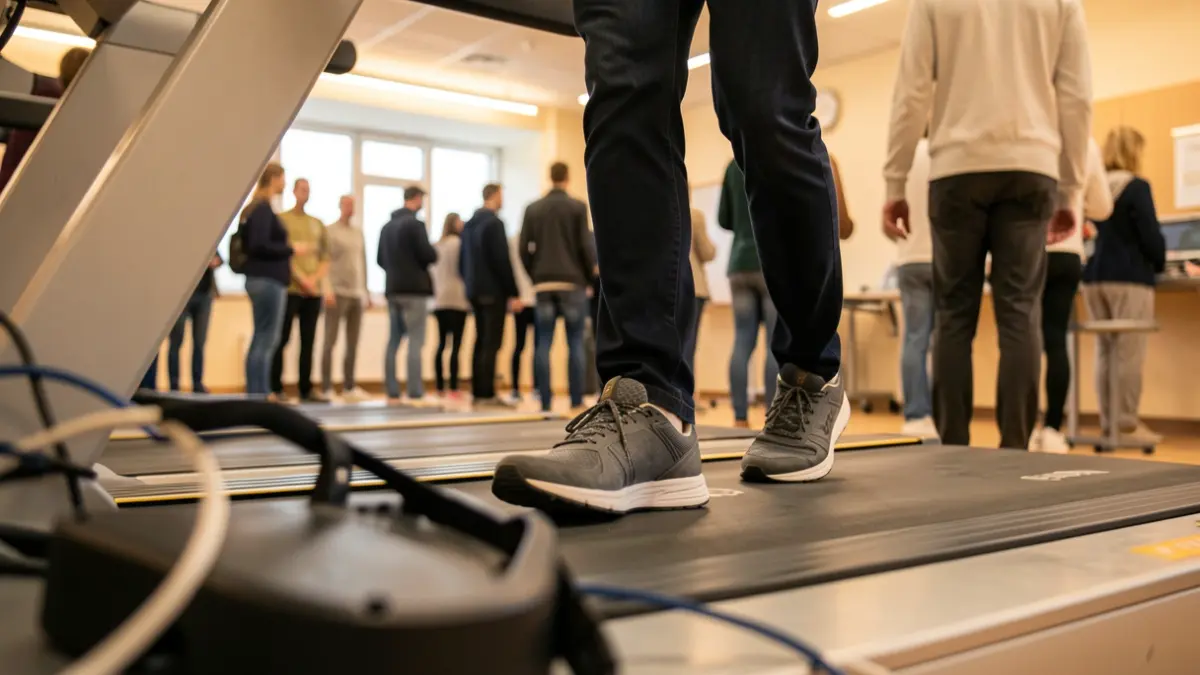
Gait disturbances are among the most debilitating symptoms of Parkinson's disease, often worsening with simultaneous tasks. A research group from Lleida has evaluated an innovative program that integrates treadmill training, virtual reality environments, and non-invasive transcranial direct current stimulation.
Preliminary results indicate improved balance and a greater sense of confidence and self-management among participants. According to researcher Helena Fernández-Lago, these multimodal interventions open new avenues for addressing the motor and cognitive deficits associated with the disease.
The clinical trial, published in Neurological Sciences, compared three modalities: treadmill training, gamified virtual reality, and the combination of both with tDCS. After six weeks, the group receiving the combined therapy showed specific improvements in gait cadence during dual-task motor situations.
Interviews with patients revealed increased confidence in mobility and the adoption of strategies to better manage complex daily mobility challenges. The research, despite being preliminary and with a small sample size, contributes to expanding knowledge on new rehabilitation strategies to enhance the quality of life for individuals affected by Parkinson's.