The plan is driven by the General Directorate of Maritime Policy and Sustainable Fisheries of the Department of Agriculture, Livestock, Fisheries and Food. Its development is led by expert researchers from the MedRecover and Benthic Ecosystem Functioning groups, attached to four research institutions: the Advanced Studies Centre of Blanes (CEAB-CSIC), the Institute of Marine Sciences (ICM-CSIC), the University of Girona (UdG) and the University of Barcelona (UB).
Emma Cebrian, coordinator of PEREMCAT and researcher at CEAB-CSIC, explained that human activity has degraded marine ecosystems to the point that conservation alone is no longer sufficient. «We are now being asked, under European regulation, to restore them», she stated, emphasising the need for a global strategy with scientific backing rather than anecdotal actions.
“"Human activity has degraded marine ecosystems to such an extent that it is no longer enough just to conserve them. We are now being asked, under European regulation, to restore them."
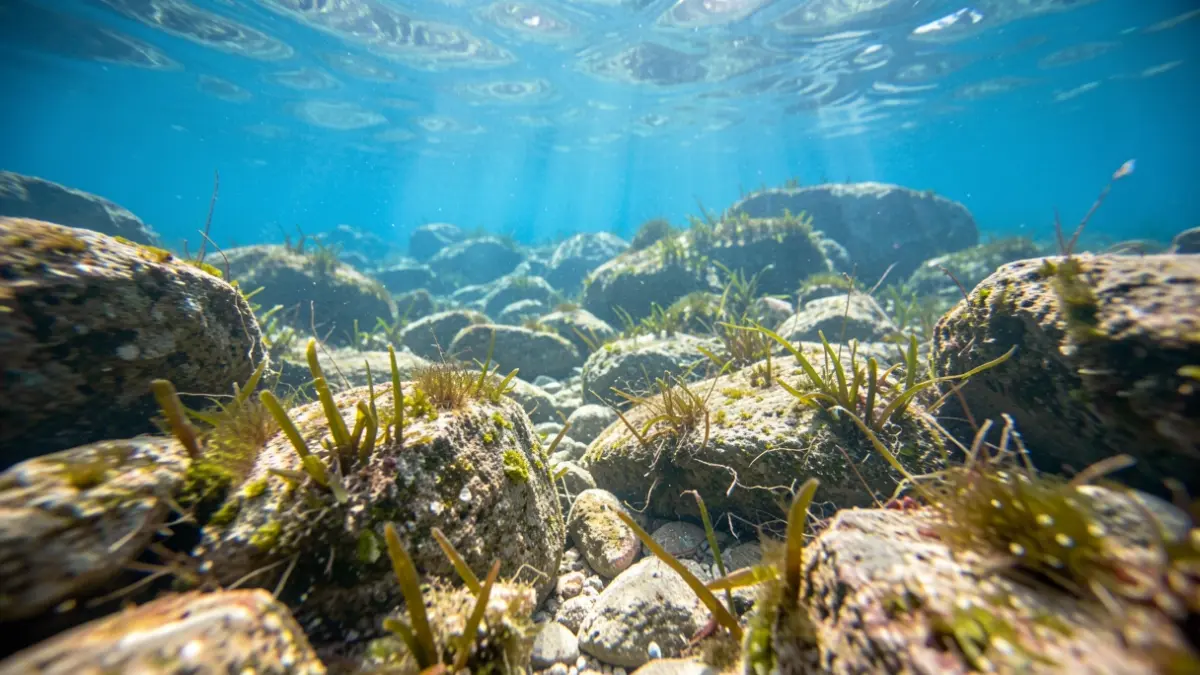
The first step of the project is to carry out a diagnosis to identify which habitats are present on the Catalan coast, their conservation status and the causes of degradation. This information will allow priority zones and the most suitable techniques for each case to be established. PEREMCAT focuses on four major habitats that act as marine «forests» and «meadows»: seagrass meadows, coraligenous bottoms, rhodolith bottoms and macroalgae forests, as well as soft bottoms.
Beyond the diagnosis, the plan foresees the first on-the-ground restoration actions, applying scientifically validated techniques and systematically evaluating those already in use. Another key pillar is governance, with a specific work line to ensure collaboration between administrations, economic sectors and professionals linked to the sea.