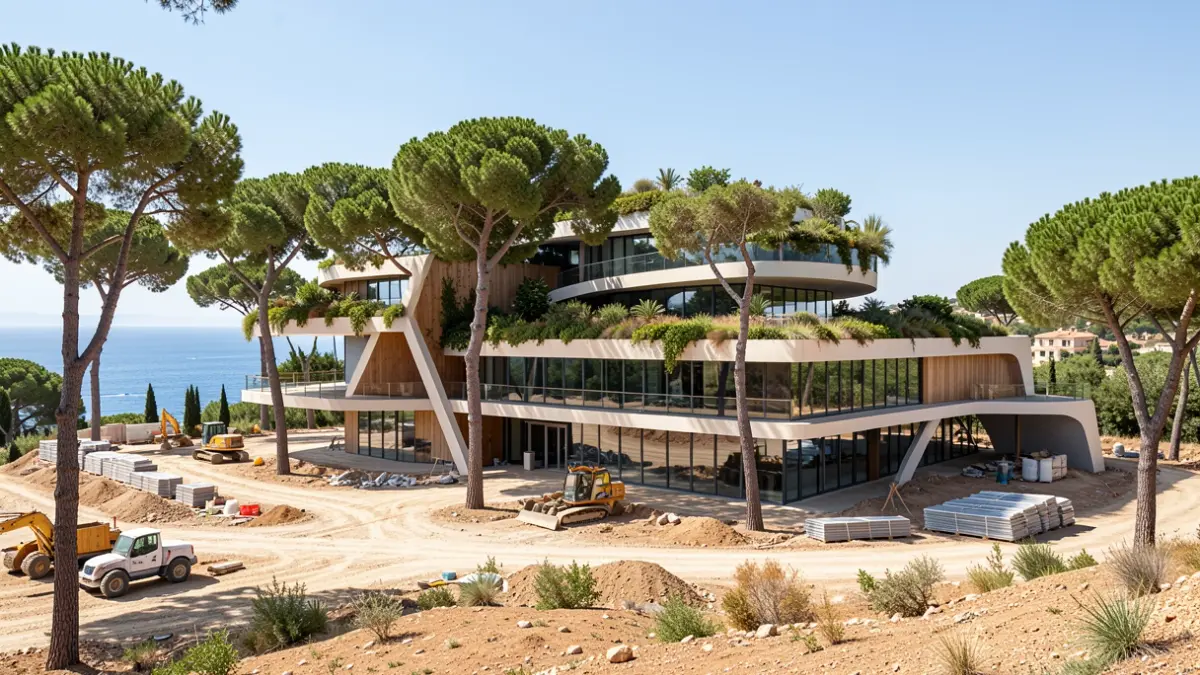
The Cal·lípolis Experiential Center, the new cultural and interpretive facility for the eponymous Roman villa and the heritage of the Vila-seca coastline, has begun construction in La Pineda. The works, which started in April on a plot between Plácido Domingo, Pep Ventura, Victòria dels Àngels, and Amadeu Vives streets, now reveal the complex's structure after four months.
This first phase of the project, with an investment of 8.2 million euros funded by Next Generation funds, includes the main building and has an execution period of approximately 18 months. According to the City Council, the foundations, bases, floors have been completed, and the enclosed spaces have been demarcated. Currently, workers are erecting pillars and constructing the structure, progressing at a good pace, having consumed about a quarter of the planned timeframe.
The museum will have a built area of nearly 1,320 square meters and will include a reception, shop, exhibition space, an immersive room, a virtual reality room, restrooms, storage, a bar-restaurant, a kitchen, and a tourist information point. The building's design, which will be surrounded by a pine forest, will seek a physical and visual connection with the sea.
The second phase of the project will address the surrounding area's urbanization, including the creation of a parking lot and the planting of 300 pine trees, within a nine-month timeframe. It is expected that both phases will overlap for one month.
Regarding the museographic project, awarded to the firm Layers of Reality for nearly 890,000 euros, it includes the drafting of content and technical design, as well as the production and installation of associated resources. The creation of virtual reality content is already finalized, while the museographic project is expected to be approved soon, between September and October. The immersive room will use projections on all four walls and the floor, complemented by an antechamber with more pedagogical content and conventional museum elements.
The narrative of the Experiential Center will trace the territory's long historical, environmental, and cultural evolution from antiquity to the present day, aiming to become a benchmark for landscape, urban, and architectural quality that respects the environment.