The Protohistoric Archaeology Team at ICAC has carried out this study, involving researchers Joan Canela, M. Carme Belarte and Judith Peix. The research establishes a first analytical reference to identify the provenance of these ceramics and deepen knowledge of this production centre in the Cessetània region.
The research combined techniques such as X-ray fluorescence (XRF), X-ray diffraction (XRD) and scanning electron microscopy (SEM-EDS). The analyses identified three different chemical composition groups, present in both amphorae and fine tableware. This coincidence suggests that, despite functional differences, raw materials and paste preparations were common.
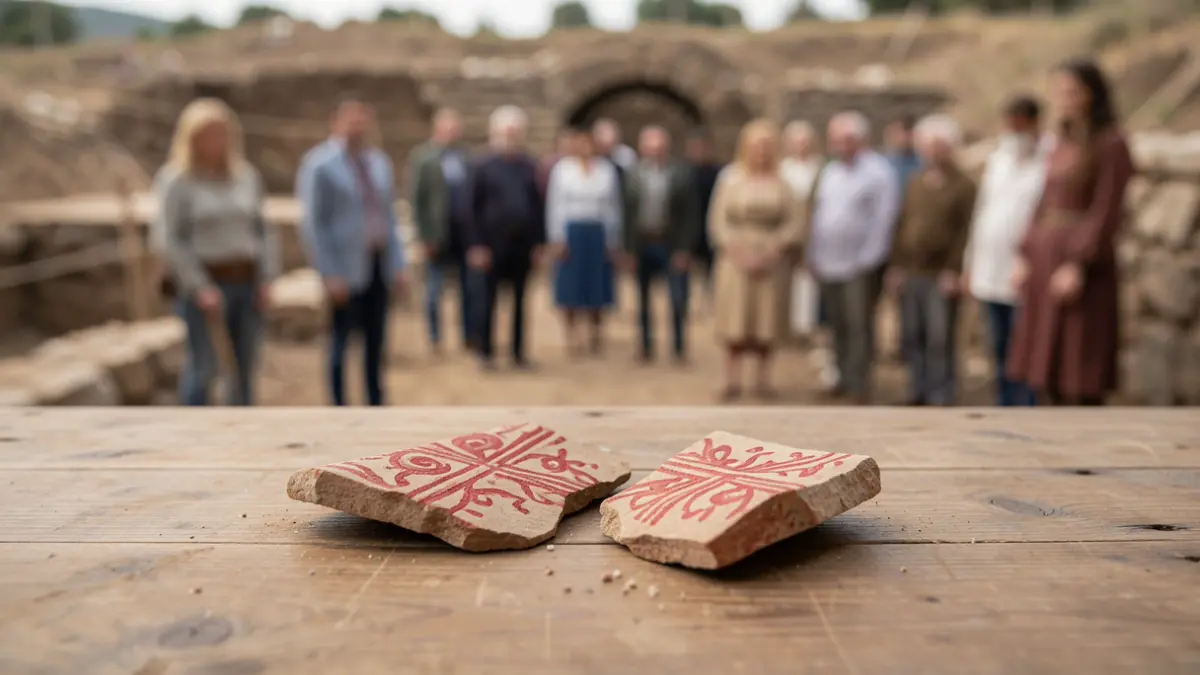
Regarding the decoration of fine tableware, especially calathoi and red-painted plates, iron-rich pigments were identified, compatible with the use of haematite and small proportions of manganese. Mineralogical analyses also allowed the estimation of firing temperatures between 850 and 1,000 °C. These data were obtained during a research stay by Judith Peix Visiedo at the HERCULES laboratory at the University of Évora (Portugal).
The archaeometric characterisation of Fontscaldes ceramics is an important step towards studying the distribution of its productions. The new reference database will allow its composition to be compared with ceramics documented at other sites and assess their possible provenance. The study is part of ICAC's four-year research project on the western Cessetània territory in the first millennium BC.
The research has received support and funding from the Department of Culture of the Government of Catalonia and the Valls Town Council, as well as support from the Archaeology Commission of the Institut d'Estudis Vallencs.