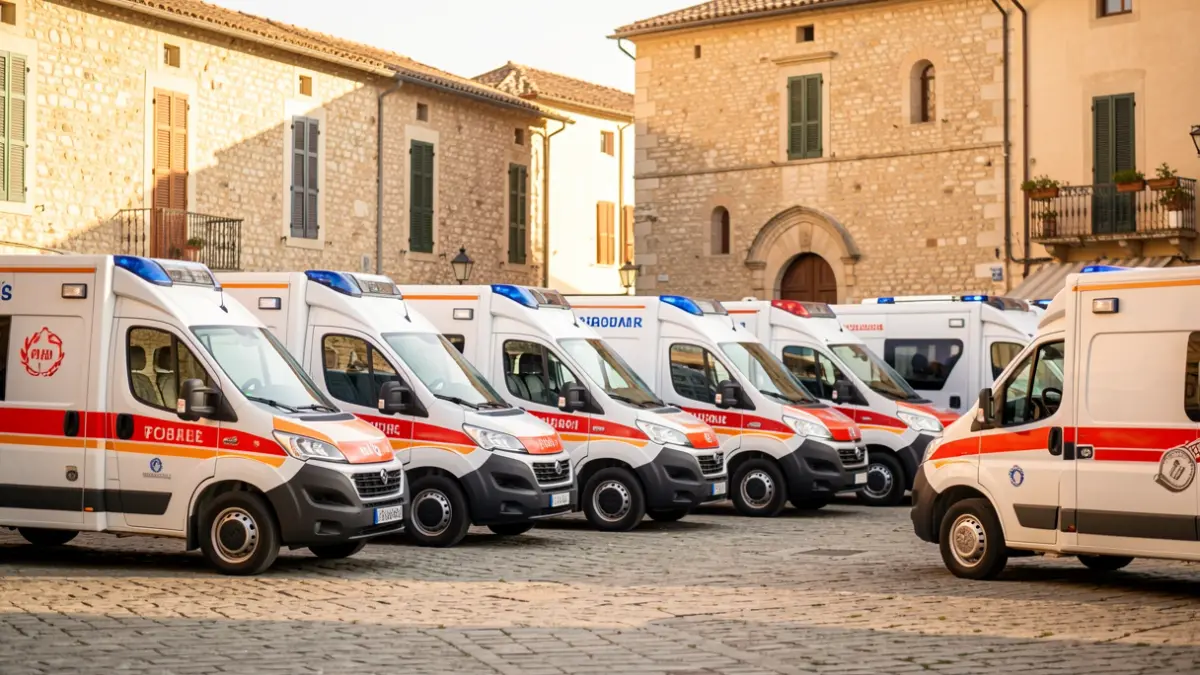
This deployment represents a 12% increase in the total number of vehicles, rising from 106 to 119 units, and includes new vehicle types and extended service hours. The new healthcare model, effective from midnight, marks a "significant qualitative leap" in improving medical care in the region.
Urgent medical transport services will see an increase in annual hours to 297,840, a 24% rise from the previous contract, to address geographical dispersion and seasonal demand fluctuations. An additional reserve of 6,520 hours is allocated for extraordinary contingencies.
Two new advanced life support units will be operational 24 hours a day in Torredembarra and Alcover, strengthening coverage in Alt Camp and Tarragonès. The operating hours of other ambulances are also extended, and four additional reinforcement units will be deployed during the summer in Altafulla, Miami, Roda de Berà, and Salou.
The company Ivemon Ambulàncies Egara will manage the service, as part of a public tender worth nearly 2 billion euros for all of Catalonia. The new contract includes the renewal of over 1,600 vehicles across the region.
Key innovations include the introduction of three new unit types with specific functionalities. In Camp de Tarragona, five of these units will feature a Medical Logistics Support (SLS) unit, and two bariatric multi-purpose ambulances will serve Reus and Tarragona. Additionally, two fully electric shuttle ambulances will facilitate short-distance transfers between hospitals.
Resource allocation is based on technical and scientific criteria developed by the SEM and the Cartographic and Geological Institute of Catalonia (ICGC), analyzing demographic data and topography to ensure efficient response times. The relocation of the VIR to Valls will enhance coverage in Conca de Barberà and Alt Camp.
The ambulances are equipped with advanced technology for more precise on-site diagnostics, including ultrasounds and immediate blood analysis. They also feature individual carbon monoxide detectors for staff and new portable radiocommunication systems to improve safety for both teams and patients.
In 2025, the SEM managed over 135,500 incidents in Camp de Tarragona, with 73,815 requiring resource mobilization. Across Catalonia, nearly 2.8 million health alerts were handled.