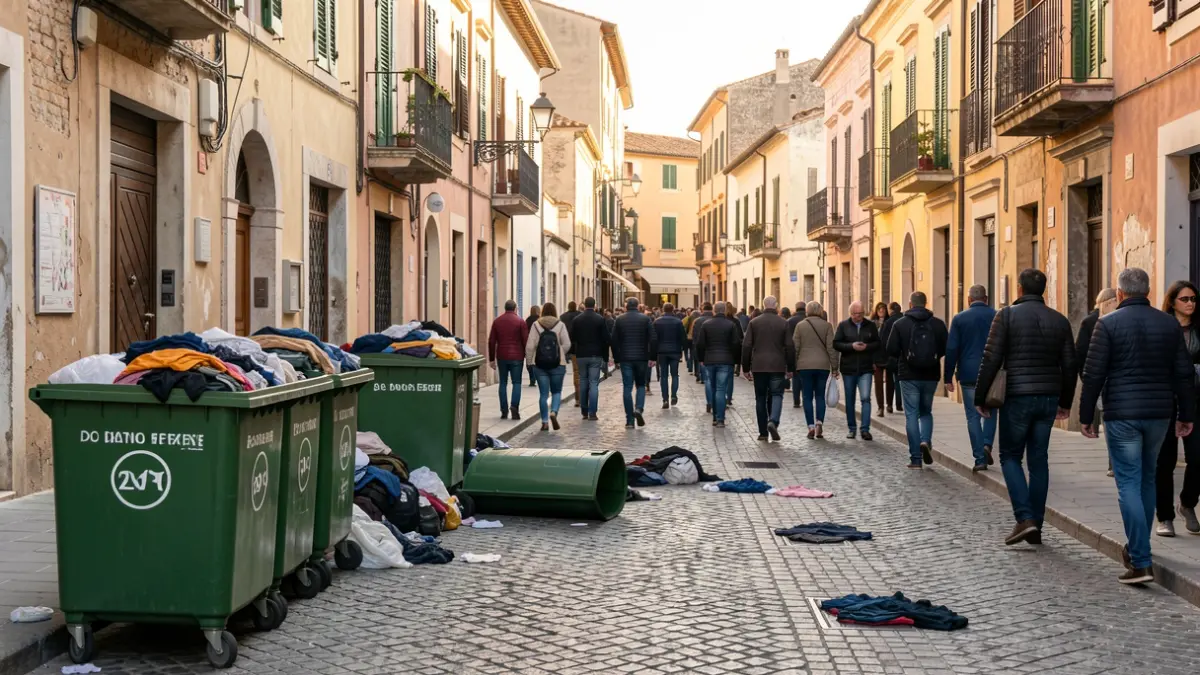
The proliferation of 'fast fashion' is directly impacting used clothing collection systems. Organizations such as Humana, with a significant presence in the region, are progressively removing donation bins for used clothing from public streets in municipalities within the Camp de Tarragona and Terres de l’Ebre. This decision stems from the difficulty in maintaining the service's viability.
According to Humana, the removal is not due to a single cause but a combination of factors. The bin system was originally designed for garments of sufficient quality to be reused or recycled with value. However, in recent years, an increasing proportion of collected material is no longer profitable and becomes low-value textile waste.
This is compounded by a shift in consumer habits, driven by 'fast fashion,' which leads to clothing having a shorter lifespan and deteriorating faster. This increases the volume of damaged garments arriving at the bins, complicating logistical and economic management. Maintaining an extensive network of public bins may cease to be sustainable if the proportion of usable clothing becomes too low.
The organization's intention is to 'reorganize' the collection system for greater efficiency, focusing efforts on channels that better guarantee material quality. This involves reducing indiscriminate street collection points and promoting more controlled forms of sorting or delivery.
We need more presence, not fewer bins
From the social textile management sector, such as L’Arada Empresa d’Inserció de Cáritas Diocesana de Tarragona, a different perspective is offered. Its manager, Idoia Jiménez, argues that the textile waste problem is not solved by reducing collection points but by reinforcing them and making them more accessible. She highlights that textiles are among the waste types with the greatest environmental impact, with only about 15% of clothing currently being recycled.
Jiménez emphasizes the need for greater territorial presence and for facilitating the deposit of clothing in specific bins, similar to other waste fractions. She underscores the importance of public awareness and shared responsibility among administrations, consumers, and industry, as well as the role of insertion companies that combine collection with job creation for vulnerable individuals.
Reinforcing the collection network, according to Jiménez, would not only increase textile reuse and recycling but also consolidate a circular economy model with direct social impact.