The plan targets municipalities with fewer than 5,000 inhabitants, decentralized municipal entities (EMD), and regional capitals with a population under 15,000. The total investment of 400 million euros will fund initiatives in areas such as public spaces, housing rehabilitation, historical heritage conservation, climate change adaptation, and economic activity stimulation. Subsidies can cover up to 100% of project costs and include a 15% reserve for project drafting.
Specifically, 101 municipalities in the Camp de Tarragona region are eligible for these grants. Of these, 51 fall into the category of under 500 inhabitants, 35 in the 501 to 2,000 range, 13 in the 2,001 to 5,000 range, and Falset and Montblanc are designated for the category aimed at regional capitals under 15,000 inhabitants. Collectively, these municipalities represent a population of 95,621 in the Tarragona region.
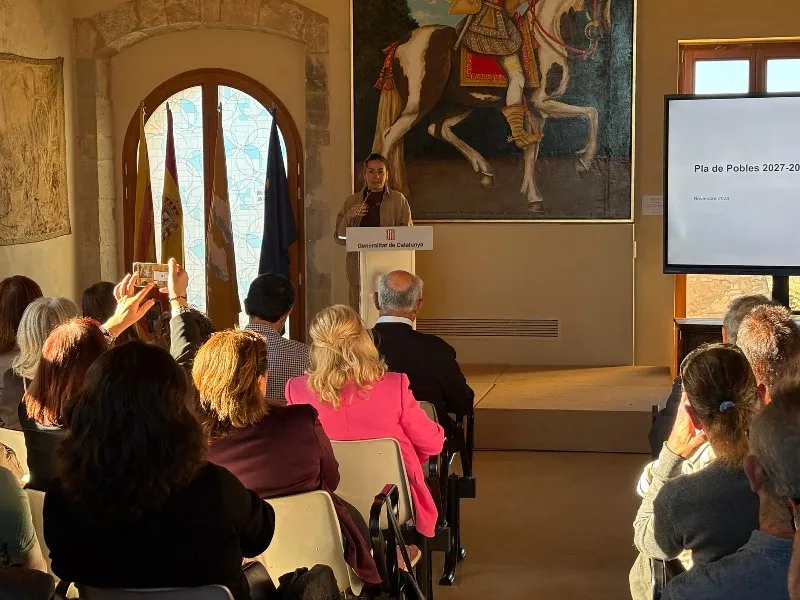
The Government delegate in Tarragona, Lucía López, and the Director General of Local Administration, Francesc Belver, explained the plan's objectives, resources, aid lines, and distribution criteria. López emphasized that "the Plan starts from the idea that living in a village should be an opportunity and not a limitation," while Belver highlighted that the plan aims "for municipalities with smaller populations to access a concentrated line of aid that has a significant impact".
The plan addresses challenges such as population aging and decline, housing access difficulties, and the need to strengthen local services and economic opportunities. Funding will be provided for actions in four areas: urban core rehabilitation, historical and tourism heritage, housing and residential regeneration, and economic activity zones.
The regulatory bases will be published in November, with the aim of opening the call for applications before the end of the year and submissions in January 2027. The final resolution will be published in the first semester. Award criteria will consider population, technical, financial, and management capacity of the local entity, as well as the territorial, social, residential, environmental, heritage, or economic impact of each action.