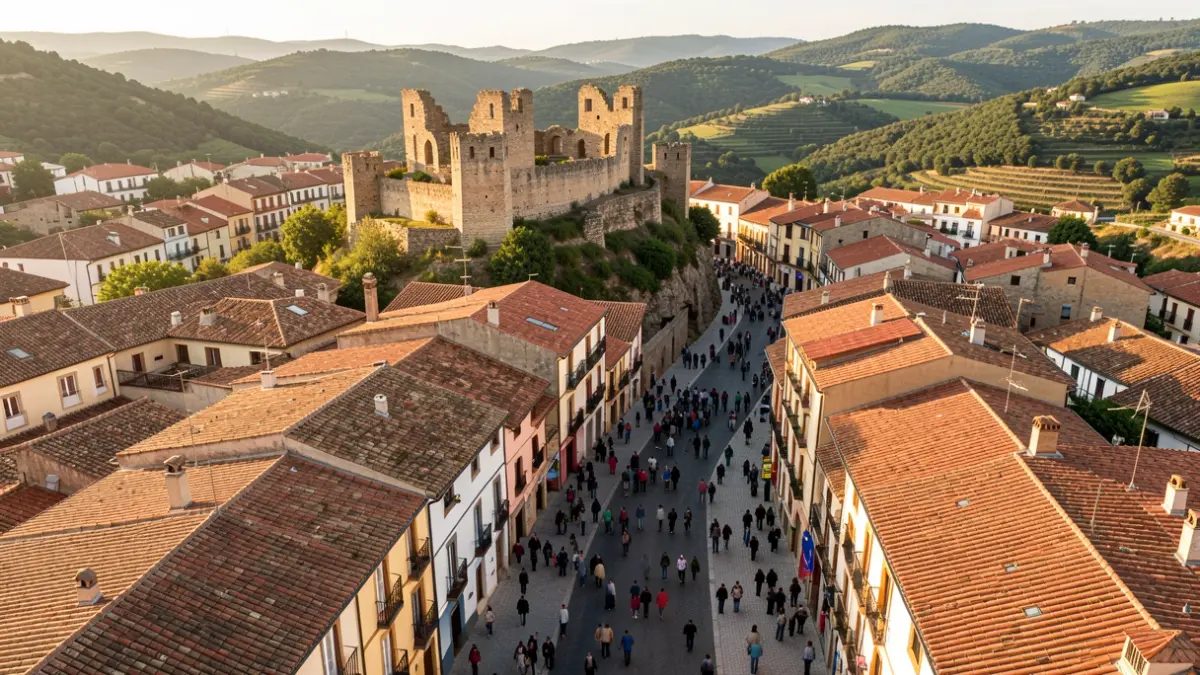
The council aims to revitalize the historic center with a comprehensive project including public space improvement, heritage recovery, economic reactivation, and housing promotion. The Generalitat de Catalunya will contribute 70% of the budget, while the City Council will cover the remaining 30%. The grant call resolution will be announced next October.
According to the Councilor for Urban Planning, Gabriel Lacambra, the goal is to restore the historic center as a vibrant, habitable, accessible, commercially active, and socially cohesive space. The mayor, Rosa Maria Perelló, emphasizes that the submitted proposal is "ambitious and maximalist" to improve quality of life in social, economic, and environmental areas, resulting from collaborative work with technical teams, advisory companies, associative fabric, and citizens.
The project, under the slogan "Re form, Re inhabit, Re animate... The Center", focuses on three main axes: physical transformation (streets, housing, heritage, energy efficiency), ecological transition (sustainability, climate adaptation, green spaces), and socio-community action (cohesion, equality, health, elderly, children).
Planned interventions include urban regeneration with accessibility and safety improvements in streets such as les Piques, Migdia, Sant Agustí, and Hospital. It also foresees the rehabilitation of municipal and private housing, support for vacant housing mobilization, and the recovery of degraded buildings, particularly around Mestre Martí street.
The recovery of the castle is a key focus, with restoration, accessibility, and urbanization efforts to turn it into a civic and cultural space. Additionally, signage and heritage routes in the historic center will be enhanced.
In terms of ecological transition, the project includes street shading, creation of climate shelters, energy and water efficiency, renaturalization of the Ondara river area, and transformation of the surroundings of the Camp dels Escolapis and the former Escorxador with new access points and green spaces.
Regarding social cohesion, support for entities, socio-educational care, intercultural cohesion, and the creation of community spaces will be strengthened, promoting programs for health, active aging, and cultural activities.
Finally, the project dedicates significant attention to economic reactivation, with programs for job insertion, support for new businesses, local commerce revitalization, a creative and artisanal economy incubator, and urban freight mobility studies.