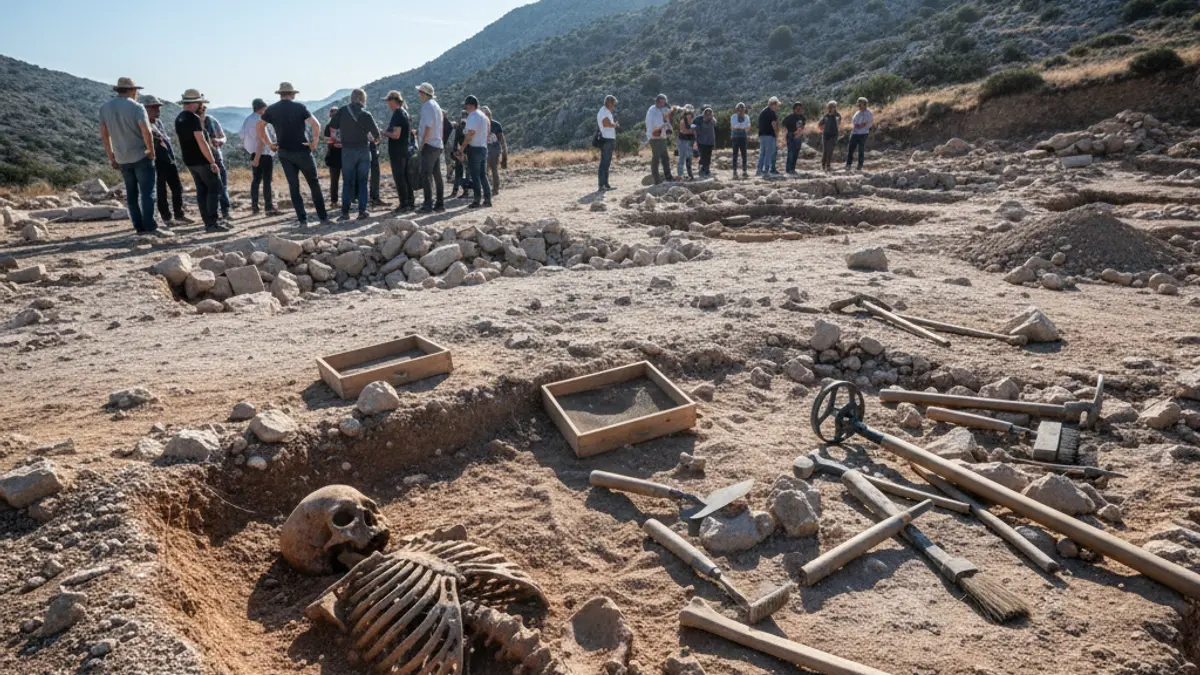
The discovery, which has surprised archaeologists, occurred in a frequently transited area on the access ramp to the esplanade of the Sant Llorenç de Munt monastery. Although the existence of a necropolis in the area was known, the exact location of these remains was unexpected.
So far, the skeletons of 14 people, mostly men, have been recovered, of which only two or three are complete. Two of these skeletons were found in anthropomorphic tombs, suggesting they belong to the monastery's first occupants during the 10th century. Further analysis will confirm the dating and other details.
“"We suspected there might be something, but considering it was a passageway, we were surprised to find complete skeletons in places where sand could have accumulated."
The more superficial remains, exposed to human passage for centuries, will require more exhaustive analysis to determine their age, possible traumas, and precise dating. The lack of objects in the tombs makes it difficult to identify the era at first glance.
Once registered and documented, the remains will be removed for detailed study, conservation, and final deposition. The next steps will include new surveys to delimit the extent of the necropolis and the drafting of an architectural master plan for the monumental complex, with the aim of highlighting the value of this important site.
“"This discovery vindicates the much-criticized decision to close the restaurant at the top of La Mola to reduce the number of visitors and preserve the space."