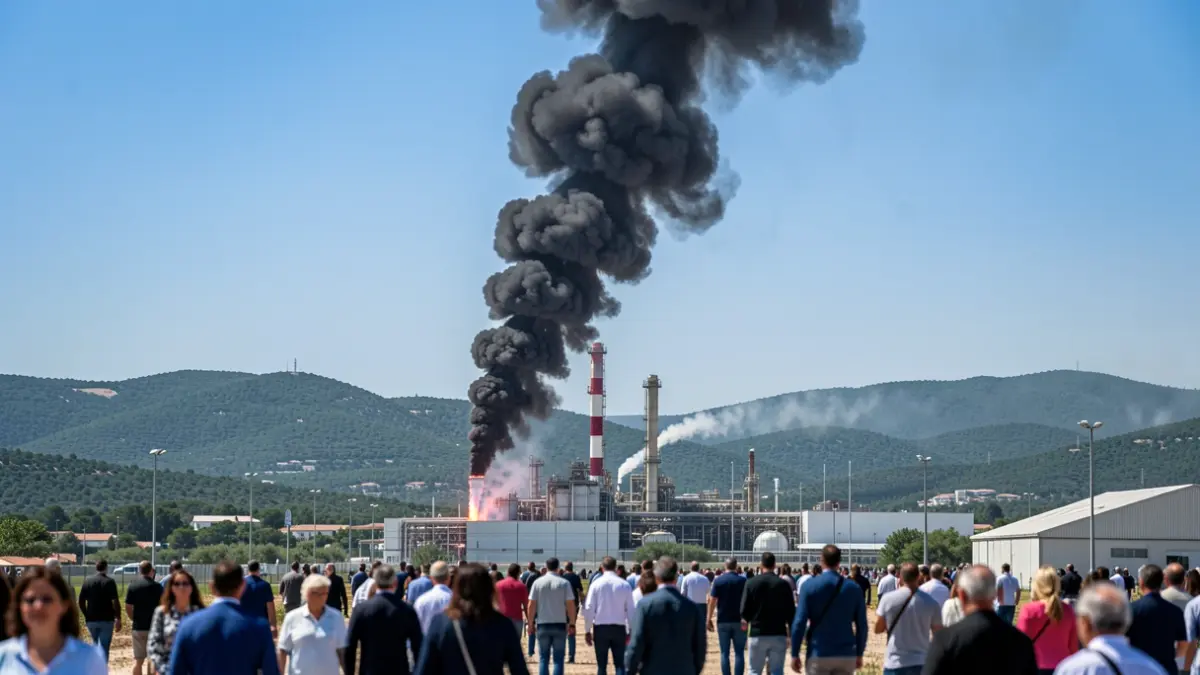
The incident, which occurred on May 28 and 29, generated visible smoke, a column of black smoke associated with the safety flare, and unpleasant odors perceived in towns such as Aiguamúrcia, Perafort, Puigdelfí, la Pobla de Mafumet, and Constantí, among others. The emergency number 112 received numerous calls related to this event.
The parliamentary initiative, led by deputy Andrés Garcia Berrio, aims to obtain answers regarding the causes of the incident, flare emissions, the response of Civil Protection, communication with affected town councils, and citizen information methods.
Garcia Berrio highlighted that public concern extended beyond municipalities near the petrochemical complex, stating: "This episode demonstrates that the effects of an industrial incident can reach far beyond the facility's perimeter. When smoke, odors, or disturbances reach the towns of Alt Camp, citizens have the right to receive clear, rapid, and understandable information from the authorities."
The deputy emphasized that the questions to the Parliament seek to clarify whether current protocols functioned correctly and if municipalities received the necessary information to address their residents' inquiries.
For his part, the mayor of Aiguamúrcia, Òscar Sendra, has called for authorities to consider the municipalities of Alt Camp in episodes with territorial impact. "The municipalities of Alt Camp also perceived the effects of this episode. When visible smoke, odors, or public concern arise, town councils need direct and updated information to respond to our residents."
Sendra advocated for adapting communication protocols to the territorial reality of the Camp de Tarragona, stressing the importance of ensuring information reaches all potentially affected municipalities and that citizens are assured of the transparency and coordination of the authorities.
The Comuns' initiative includes specific questions about which municipalities were officially considered affected, what information town councils received, what data the Generalitat has on calls to 112, and whether the PLASEQTA information protocols will be reviewed for incidents that, without constituting a chemical emergency, generate social alarm or concern.
The Comuns believe this event should serve to strengthen public information, institutional coordination, and citizen confidence in the civil protection and industrial safety mechanisms of the Camp de Tarragona.