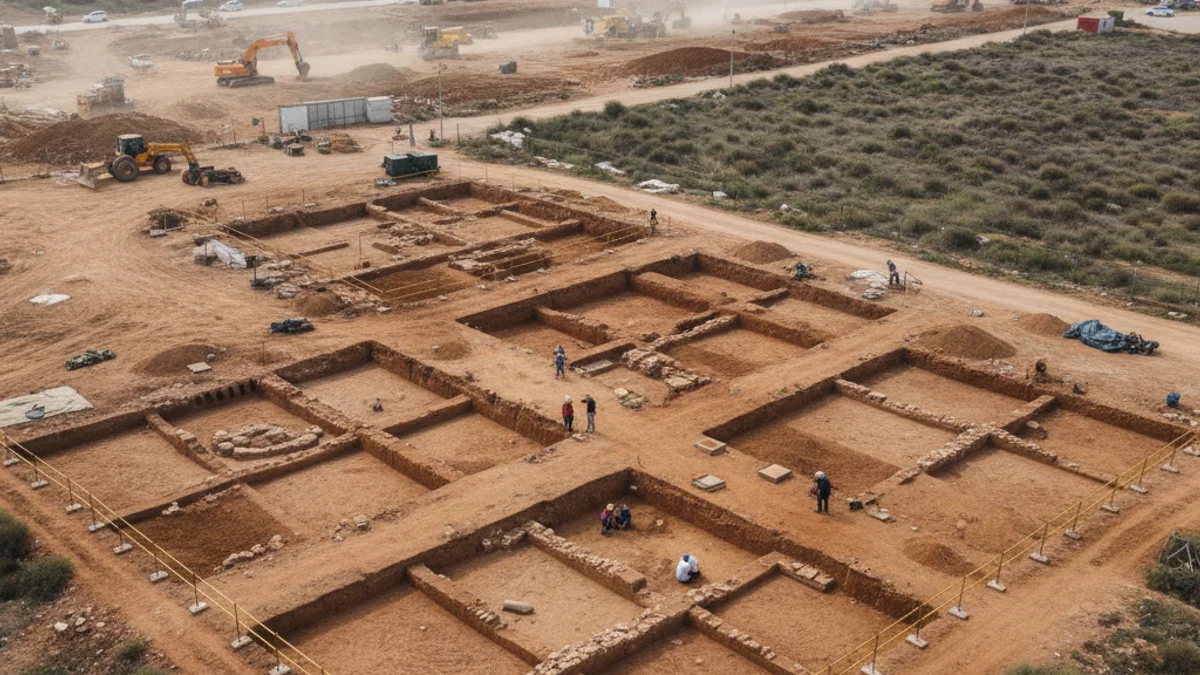
The last municipal plenary session of the Figueres City Council gave the green light to the project, drafted by the Figueres architect Jordi Cuadras and promoted by the company Pla de l’Aigüeta, SL. This urban development, located between Els Cendrassos and Aigüeta Street, provides a new window to leverage the works and continue the search for ancient remains.
“"In fair measure, we must consider it an archaeological testimony about the possible existence of occupation remains in this l'Aigüeta area, around the 1st century BC. The piece has been taken out of context, as a relevant antiquity, but it must be remembered that other archaeological materials were found next to it."
The Vas de l’Aigüeta, located at the end of the 19th century, was considered for decades a foundational piece that fueled the idea of a direct Iberian past for the Figueres settlement. However, recent studies, such as that by Josep Barberà and Joaquim Tremoleda published in the Annals de l’Institut d’Estudis Empordanesos, have critically reviewed this interpretation.
These archaeologists conclude that the vase appeared decontextualized, mixed with clearly Roman remains, and classify it today as common pottery from the Ibero-Roman period, datable to the second half of the 1st century BC. Despite the reinterpretation, the piece retains strong symbolic value as evidence of human occupation preceding medieval Figueres.
The current expectation, according to archaeology doctor Anna Maria Puig and municipal architect Joan Falgueras, is very high. They aim to locate remains of a Roman villa associated with the passage of the Via Augusta, as the l'Aigüeta area is a strategic location fully integrated into the dynamics of the ancient world.