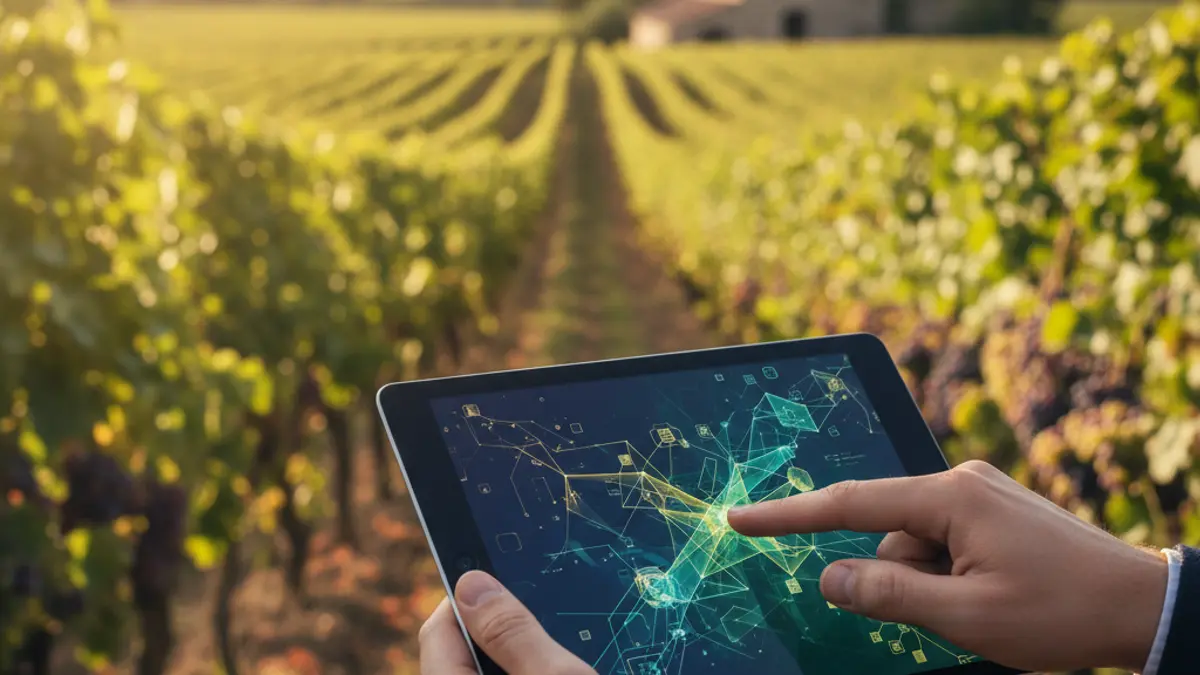
The auditorium of Celler Peralada hosted a conference dedicated to artificial intelligence applied to the Empordà wine sector. During the event, various specialists presented the multiple applications of this technology in the primary sector, including viticulture.
“"Artificial intelligence is not a utopia, but a tool that is here to stay and is an essential lever for competitiveness."
AI is presented as a transversal tool capable of improving every phase of the value chain, from grape harvesting to wine commercialization. It allows for better planning, management, and prediction, facilitating proactive decision-making.
A practical example presented was the use of predictive models for plant health, which help anticipate the first infection of mildew, a fungus that affects crops. This anticipation allows for avoiding unnecessary treatments, reducing economic and environmental costs. The use of drones to inspect large cultivation areas, assess grape ripening, or detect infections was also mentioned.
In the restaurant sector, AI is used to optimize management and boost the wine business. Platforms like ISUMI have been developed to streamline wine selection and sales to restaurateurs, offering added value to the final customer. This tool allows for easy updating of wine lists, including prices per glass, and translating detailed information into several languages.
For consumers, ISUMI incorporates a digital sommelier that recommends wines based on individual preferences, explaining the reasons behind each suggestion. In the B2B sector, AI facilitates the order process through chatbots, freeing up sales staff for sales tasks and customer service.
In viticulture, innovation can be integrated with tradition. Projects such as the Rovinya robot, autonomous and electric, designed to perform various tasks during harvest, were presented. Another project, ROCOLA, has developed a camera to detect foreign bodies in wine bottles. Currently, work is underway on the creation of VitiGPT, a proprietary AI that will centralize research information and data from the cluster to aid in decision-making based on verified data.