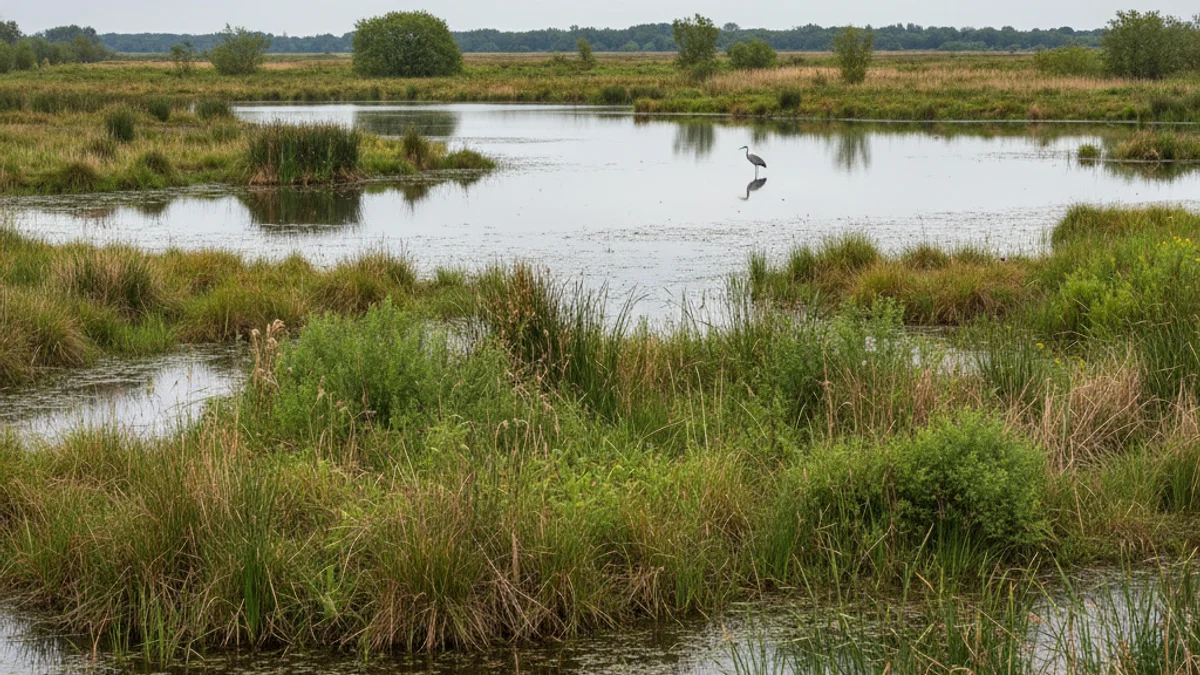
The natural park is experiencing a clear moment of recovery after a long period marked by the most severe drought in its history. The sustained precipitation recorded, along with the storm on January 20, have been key to raising the water level and favoring aquifer recharge. This improvement has allowed the Vilaüt Pond and its surroundings to be full again, a sight not seen for a long time.
The improvement in water conditions has had a direct impact on the ecosystem, halting the salinization process that had severely affected the flora. The vegetation typical of wetland areas has grown back strongly, reversing the trend where species more resistant to salinity, such as tamarisk, were replacing native flora.
“"Typical wetland species, such as riparian forests: ash, elm, poplars, suffered greatly from saline intrusion and the lack of fresh water."
This new scenario directly benefits the fauna, especially birds, as the abundance of accumulated water allows the recovery of open water ponds and reed beds. The increase in available habitats makes the park a more attractive space for the stay, breeding, and reproduction of numerous species. Among the notable observations is the presence of the Slavonian Grebe, a bird originating from northern Europe very unusual in the area and which had not been seen for two decades.
It should be remembered that the lack of water left 300 hectares of the Estanys integral reserve completely dry, which depend on the Muga river basin. The extreme situation caused the death of fish and hundreds of naiads (an invasive Asian species), in addition to a drop in wintering bird censuses, which moved to other areas due to lack of food.